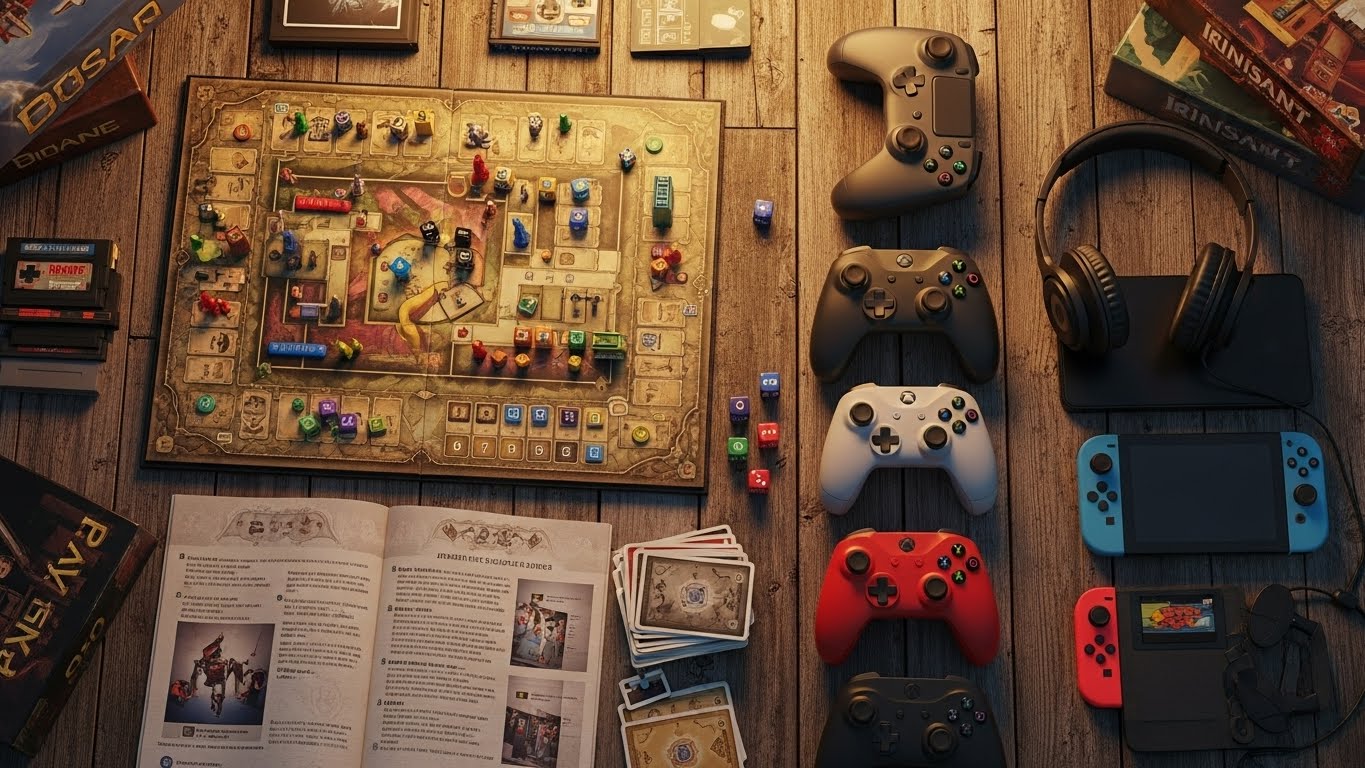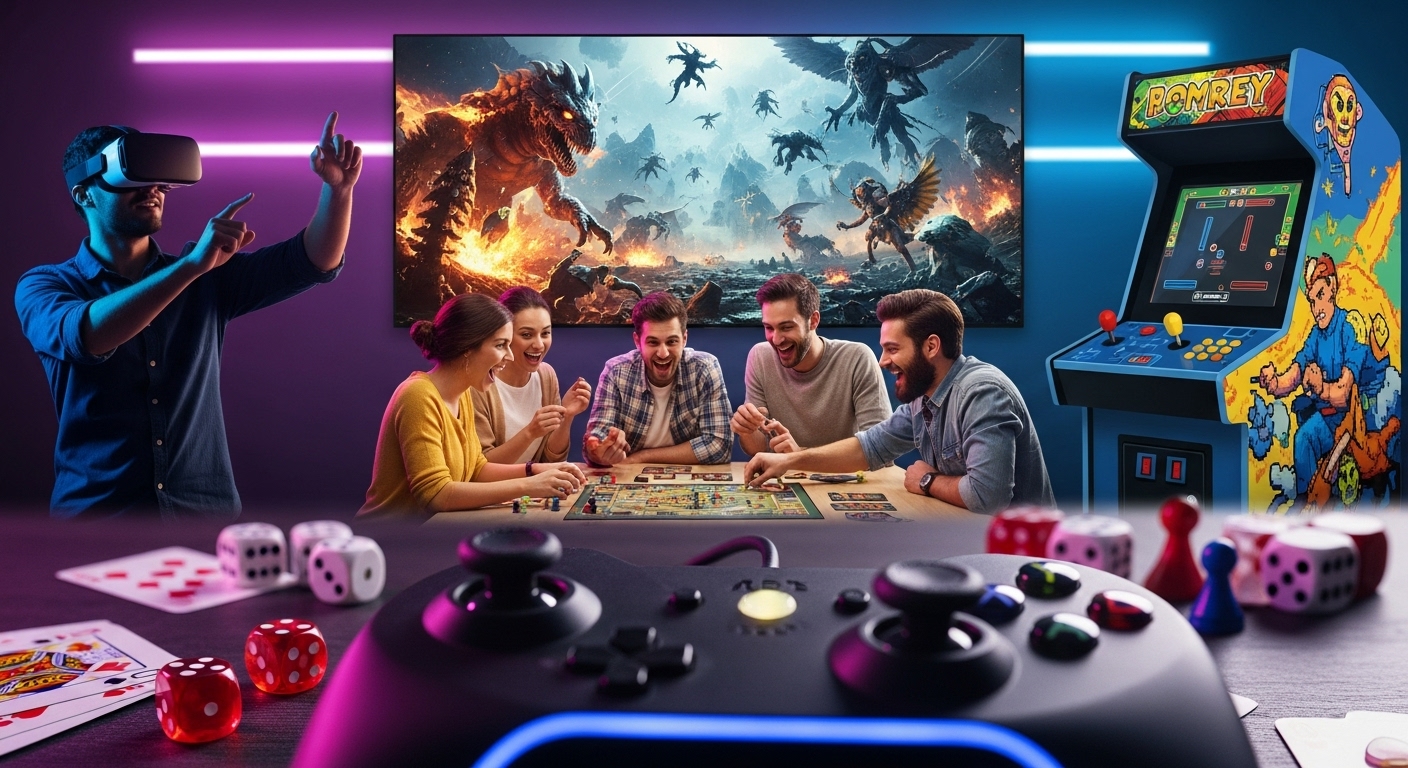
Games have been a cornerstone of human culture for centuries, bridging generations, cultures, and geographical divides. From traditional board games and sports to the most immersive video games we experience today, games have always served as a form of entertainment, education, and social interaction. Over time, gaming has evolved from simple pastimes to a multi-billion-dollar industry that has changed the way we perceive entertainment. In this blog post, we will explore the various dimensions of games, their impact on society, and what the future holds for this beloved pastime.
The Roots of Gaming: A Historical Perspective
Before the rise of digital gaming, people entertained themselves with physical games that required no technology, only creativity and skill. Ancient civilizations were known to play games such as Senet in Egypt, Go in China, and Chess in Europe. These games were much more than mere leisure activities—they often had strategic, intellectual, or even spiritual significance.
Board games, card games, and sports became staples in many cultures. They not only served as entertainment but also as tools for social bonding and teaching important life skills like strategy, teamwork, and resource management. The basic human instinct to compete, cooperate, and create challenges is deeply embedded in the legacy of these early games.
The Digital Revolution: Video Games Take Over
The landscape of gaming underwent a dramatic shift in the late 20th century with the birth of video games. In the 1970s, arcade games like Pong and Space Invaders were among the first examples of interactive digital entertainment. These early video games were simple, yet captivating, providing an entirely new form of play that couldn’t be replicated by traditional board games.
The 1980s saw the introduction of home consoles like the Atari 2600 and Nintendo Entertainment System (NES), bringing video games into homes across the world. These systems allowed gamers to enjoy titles like Super Mario Bros., Pac-Man, and The Legend of Zelda, setting the foundation for the booming gaming industry. These games were more than just digital iterations of traditional games; they were complex worlds full of challenges, characters, and interactive narratives that players could explore.
The Evolution of Game Design: From 2D to 3D Worlds
As technology advanced, so too did the design of video games. The 1990s marked the transition from 2D to 3D graphics, which revolutionized the way players experienced games. Super Mario 64 and The Legend of Zelda: Ocarina of Time brought expansive, open-world environments to the forefront, where players could move freely through detailed, immersive 3D worlds. This shift was not just about better graphics; it was about creating virtual spaces where players could engage with the game on a much deeper level.
The introduction of 3D graphics also allowed for more intricate storytelling. Games were no longer just about reaching the next level or beating a high score—they began to tell emotional, complex stories. Games like Final Fantasy VII and Metal Gear Solid introduced players to intricate narratives, rich character development, and moral dilemmas that added depth to the gaming experience. These games demonstrated that video games could be as emotionally powerful and thought-provoking as any book or film.
The Rise of Online Multiplayer Gaming
One of the most significant transformations in the world of gaming came with the rise of online multiplayer experiences. In the late 1990s and early 2000s, the internet began to make its way into gaming, and with it, the ability for players to connect with others across the globe. This was the dawn of online gaming, which allowed people to play together (or against each other) in real-time, no matter where they were in the world.
Games like World of Warcraft, Counter-Strike, and Halo became cultural phenomena, bringing people together through cooperative play and competitive tournaments. The emergence of online multiplayer games gave birth to gaming communities, where players could form friendships, share strategies, and work together to conquer challenges.
The rise of esports further solidified the competitive aspect of gaming. Esports tournaments for games like League of Legends, Dota 2, and Fortnite now draw millions of viewers, with professional players earning significant salaries and sponsorship deals. What was once a casual hobby has now become a legitimate career path for many.
Mobile Gaming: A New Frontier
In the past decade, mobile gaming has exploded in popularity. The advent of smartphones and tablets made it easier than ever for people to access games. Mobile games like Candy Crush, Clash of Clans, and Pokémon GO attracted millions of players from all demographics. These games are often designed to be accessible, with simple mechanics that can be enjoyed in short bursts, making them perfect for on-the-go gaming.
Mobile gaming has also introduced new business models, such as freemium games where players can download and play for free but are encouraged to make in-game purchases. This model has been highly successful and has helped the mobile gaming industry grow into a massive revenue-generating force.
Virtual Reality: Stepping Into New Dimensions
The next frontier in gaming is Virtual Reality (VR). With VR headsets like the Oculus Rift and PlayStation VR, players can step into completely immersive digital worlds, experiencing games like never before. VR allows players to interact with the game environment in a way that is impossible with traditional controls. Games like Beat Saber and Half-Life: Alyx showcase the full potential of VR, offering fully interactive experiences where players can physically move, dodge, and interact with the game world.
Although VR is still a relatively young technology, it holds immense potential. As VR hardware becomes more affordable and advanced, it’s likely that we will see even more innovative games that blur the line between reality and digital worlds. Imagine being able to physically explore a medieval castle, go on a space adventure, or even experience your favorite movie as a fully interactive story.
The Future of Gaming: Cloud Gaming and Beyond
Looking toward the future, cloud gaming appears to be the next major development in the gaming industry. Services like Google Stadia and Xbox Cloud Gaming are already making it possible for players to stream games directly to their devices without the need for high-end hardware. Cloud gaming could democratize gaming, making it accessible to more people, regardless of their financial means or access to gaming consoles or PCs.
In addition, advancements in artificial intelligence (AI) will likely shape the future of gaming. AI could be used to create more realistic, adaptive, and intelligent non-playable characters (NPCs), enhancing immersion. Furthermore, AI-driven narratives could allow games to adapt in real-time to a player’s choices, creating a unique and personalized experience every time they play.
Gaming as a Cultural Phenomenon
Beyond the entertainment value, gaming has become a powerful cultural force. It has inspired movies, books, and TV shows, while also giving rise to an entire subculture. Gaming conventions such as E3 and PAX attract millions of fans, showcasing the enthusiasm and creativity of the gaming community. Major franchises like Super Mario, The Legend of Zelda, and Minecraft have become household names, and their characters are as iconic as any film or television character.
Gaming has also made its mark on the world of education, where it is being used to teach everything from history to science to problem-solving skills. Gamification is now a popular concept in schools and workplaces, where elements of game design are used to encourage learning, productivity, and engagement.
Conclusion: A World of Endless Possibilities
Games have come a long way since their humble beginnings. They have evolved from simple pastimes into complex, interactive experiences that can educate, entertain, and connect people from all walks of life. Whether through casual mobile games, immersive VR experiences, or competitive esports tournaments, gaming has become an essential part of modern culture.
As technology continues to advance, the world of gaming will only continue to expand. Virtual reality, artificial intelligence, and cloud gaming are just the beginning of what promises to be a thrilling future. The magic of games lies in their ability to take us to new worlds, challenge our skills, and bring us together in ways that only this form of interactive entertainment can.