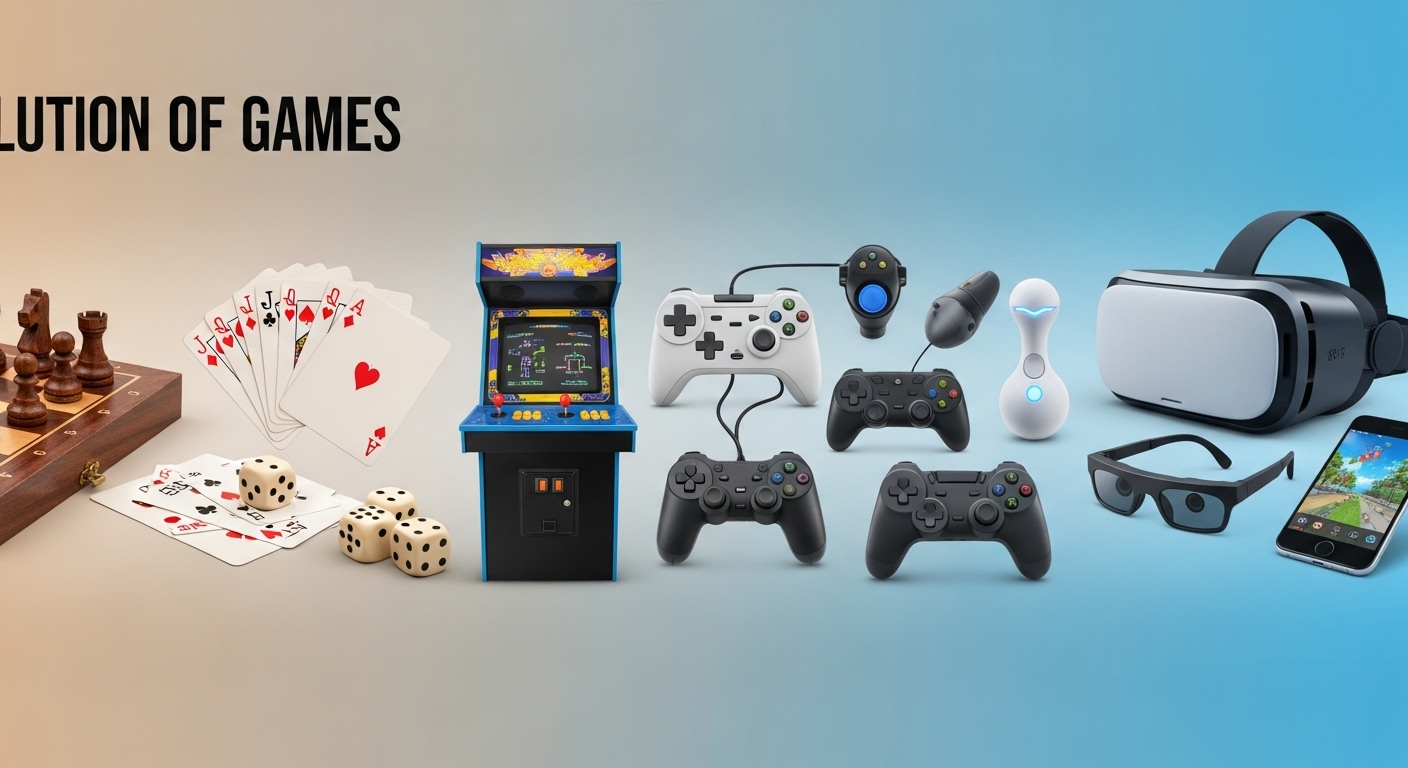
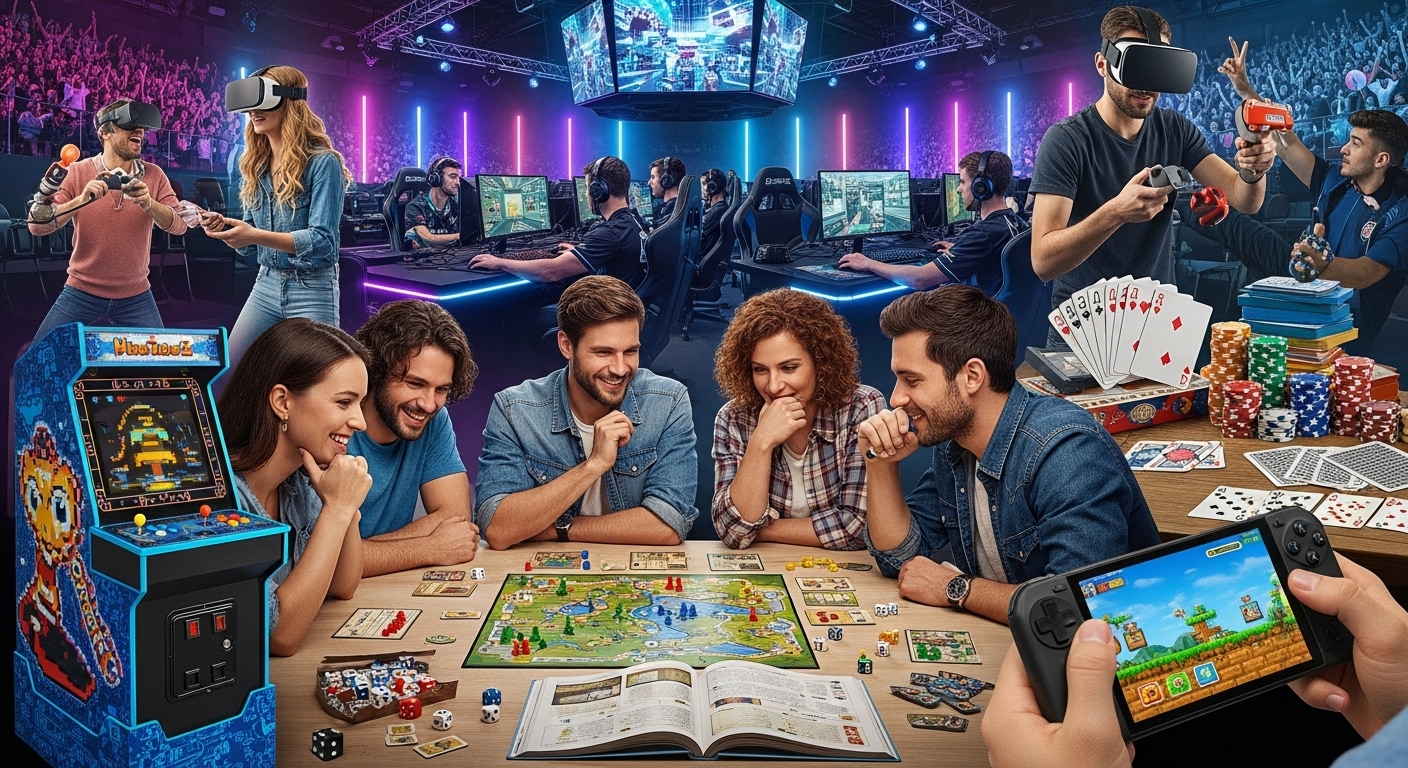
Games have been a part of human culture for centuries, whether through physical sports, board games, or interactive video experiences. Today, gaming is not only a pastime but a global culture that unites millions of people from all walks of life. It’s a world where creativity meets technology, and players dive into vast universes that challenge their skills, imagination, and even emotions. In this blog post, we will explore the transformative journey of games, from their traditional origins to the cutting-edge experiences of modern gaming.
The Birth of Games: From Classic Pastimes to Digital Play
At their core, games are designed to entertain, challenge, and bring people together. Historically, games were simple social activities. The ancient Egyptians enjoyed Senet, a board game believed to hold spiritual significance, while the Greeks and Romans were known for various dice and board games that served as both entertainment and tools for developing strategic thinking.
With the advent of technology in the 20th century, games evolved into something more complex and immersive. The early days of video games were defined by basic, pixelated graphics and simple mechanics. Games like Pong and Space Invaders introduced the concept of interactive entertainment to the masses, inviting players to experience competition and adventure in ways that traditional games couldn’t offer. These early titles sparked a global revolution that led to the gaming industry we know today.
The Rise of Video Games: A New Era of Entertainment
The 1980s marked the beginning of video games becoming a household staple. With the release of consoles like the Nintendo Entertainment System (NES) and the Sega Genesis, gaming was no longer confined to arcades. Players could now enjoy rich, colorful games in their homes. Iconic games like Super Mario Bros. and The Legend of Zelda not only defined their respective genres but also introduced gamers to vast worlds filled with imaginative characters and intricate challenges.
These consoles helped popularize gaming as a form of entertainment for all ages. The ability to immerse oneself in another world—whether solving puzzles, jumping through platforms, or fighting fierce enemies—became a unique form of escapism. During this period, developers began to push the limits of what was possible within the confines of the hardware, setting the stage for the expansive digital worlds to come.
Expanding Worlds: 3D Games and Open-World Exploration
By the 1990s, the gaming landscape underwent a significant transformation. The shift from 2D to 3D graphics marked a leap forward in visual and gameplay complexity. Games like Super Mario 64 and The Legend of Zelda: Ocarina of Time introduced expansive worlds where players could explore in three dimensions. This was not just about better graphics; it was about creating living, breathing worlds that felt vast and real.
The era also saw the birth of open-world games, where players could roam freely across massive landscapes, complete side missions, and engage in dynamic interactions. Grand Theft Auto III and The Elder Scrolls III: Morrowind were pioneers of the open-world genre, providing players with the freedom to choose how they wanted to interact with the game world. These games broke free from linear narratives, giving players agency in shaping their own stories.
Multiplayer Gaming: Bringing People Together
One of the biggest shifts in the world of games has been the rise of multiplayer experiences. The internet revolutionized how games were played and experienced, allowing people from all over the world to connect and compete. This not only expanded the audience for games but also created thriving communities centered around specific games or genres.
Games like World of Warcraft and Halo pioneered online multiplayer gaming, bringing millions of players together to work in teams or compete against one another. Whether through cooperative missions or competitive PvP (player versus player) modes, multiplayer games gave people a sense of community and camaraderie. Fortnite and Call of Duty further elevated this trend, turning multiplayer gaming into an ever-evolving social space where players could interact, make friends, and share experiences.
The Rise of Mobile Games: Gaming in the Palm of Your Hand
While traditional gaming has largely been dominated by consoles and PCs, the rise of smartphones revolutionized the gaming industry. Mobile gaming opened up a new frontier, allowing people to game anywhere and anytime. Games like Angry Birds, Candy Crush, and Clash of Clans quickly became global phenomena, attracting a wide demographic of players, from casual gamers to hardcore fans.
Mobile games often feature bite-sized experiences that are perfect for quick play sessions, but some, like Pokémon GO and Genshin Impact, also offer deeper, more immersive worlds that can be enjoyed on the go. The mobile gaming market is now a juggernaut, generating billions of dollars in revenue each year and continuously evolving with new technologies, such as augmented reality (AR) and cloud gaming.
Virtual Reality and the Next Evolution of Gaming
One of the most exciting developments in the gaming world is the rise of Virtual Reality (VR). VR gaming allows players to step inside a fully immersive digital environment, creating an experience that is unlike anything seen in traditional gaming. With the help of VR headsets like the Oculus Rift and PlayStation VR, players can look around, interact with objects, and feel as though they are truly part of the game world.
Games like Beat Saber and Half-Life: Alyx are leading the charge in VR gaming, offering unique experiences that go beyond what traditional games can provide. VR offers a new level of immersion and physicality, allowing players to move and interact with their surroundings in real time. Although the technology is still developing, VR is poised to revolutionize gaming in the years to come.
The Future of Gaming: Expanding Horizons
As we look to the future, it’s clear that gaming will continue to evolve in exciting ways. Cloud gaming is one of the most promising advancements, allowing players to stream games without needing expensive hardware. Services like Google Stadia and Xbox Cloud Gaming enable gamers to play graphically demanding titles on almost any device, from smartphones to low-end laptops. This could democratize gaming, making it accessible to a larger audience regardless of their hardware capabilities.
Additionally, technologies like artificial intelligence (AI) and machine learning are beginning to influence game design. AI-driven characters can offer more dynamic interactions, and procedurally generated worlds ensure that no two gaming experiences are ever the same. As AI continues to improve, we may see more personalized, adaptive narratives that change based on player behavior, making each playthrough unique.
Augmented Reality (AR) is another technology that will likely play a bigger role in the future of gaming. Games like Pokémon GO have already shown how AR can blend the real world with digital elements, and in the future, we might see even more sophisticated AR experiences that change how we interact with our surroundings.
Conclusion: A Never-Ending Adventure
Games have come a long way since their early days of board games and basic video games. Today, they are a vibrant, multi-faceted form of entertainment that brings people together, challenges their intellect, and provides an escape into alternate realities. With innovations like VR, AR, and cloud gaming on the horizon, the world of gaming is more exciting than ever. Whether you are a casual mobile gamer or a dedicated esports competitor, one thing is certain: the adventure is far from over. The future of gaming holds endless possibilities, and we are all part of this dynamic, ever-evolving digital landscape.