
Introduction: The Ever-Present Allure of Games
Games have always been a part of human existence, from the simple pleasures of childhood play to the competitive arenas of modern esports. They bring people together, challenge our minds, and allow us to explore new worlds, all while providing a healthy escape from the routines of daily life. Whether it’s through physical board games, digital video games, or emerging technologies like virtual reality, gaming has evolved and adapted to meet the desires of every generation. What makes games so universally appealing, and why do they continue to captivate millions of people around the world?
In this blog post, we’ll explore the history of games, the various types that have emerged over time, the psychological and social benefits of gaming, and how technological innovations are shaping the future of gaming. We’ll also take a closer look at how games, whether digital or traditional, have transcended their original purpose of entertainment to become cultural phenomena, shaping everything from social interactions to industries.
The Origins of Games: From Ancient Times to Modern Play
The history of games dates back to ancient civilizations, where they were often intertwined with culture, education, and social hierarchy. Evidence of early games can be found in various archaeological sites around the world, and they often held deeper meanings than mere entertainment. For example, Senet, the oldest known board game, was played in ancient Egypt around 3100 BCE and is thought to represent the journey of life and the afterlife. Similarly, the ancient Mesopotamians played a form of dice game that had cultural and religious significance.
As societies evolved, so did games. The Greeks and Romans introduced a wide variety of games that involved both skill and chance, such as dice games, chariot racing, and even gladiatorial combat, which would later evolve into more modern forms of competitive sports. Meanwhile, games like chess, which originated in India around the 6th century, began to emphasize strategy, intelligence, and foresight. The emergence of such games marked a shift from purely chance-based play to more strategic, skill-oriented activities.
The evolution of games accelerated in the 19th century with the rise of mass-produced board games like Monopoly, Scrabble, and Clue, which became household staples. These games offered a new form of social interaction and entertainment, laying the groundwork for the digital games that would follow in the 20th century.
The Rise of Digital Gaming: A Revolution in Play
With the advent of computers and the development of video game consoles in the 1970s and 1980s, digital gaming became the new frontier of entertainment. The first arcade games, such as Pong and Space Invaders, introduced players to a new type of interactive entertainment that combined quick reflexes and hand-eye coordination. As technology advanced, so did the complexity and graphics of video games, with iconic titles like Super Mario Bros., The Legend of Zelda, and Tetris changing the gaming landscape forever.
In the 1990s and 2000s, the internet enabled multiplayer gaming, bringing people from around the world together in virtual spaces. Games like World of Warcraft and Counter-Strike allowed players to interact with one another in real-time, forging friendships and rivalries on a global scale. This marked the beginning of online gaming, which has since become a multi-billion-dollar industry.
Today, video games continue to be a dominant force in entertainment. The gaming industry is now larger than both the music and film industries combined. From consoles like PlayStation and Xbox to mobile games on smartphones, digital gaming is accessible to millions of people across all walks of life. This new wave of gaming also includes innovations like virtual reality (VR), which provides players with immersive experiences, and augmented reality (AR), which blends the digital and real worlds.
Types of Games: A Spectrum of Play
The world of games is vast and varied, encompassing a wide range of genres and formats. Whether you’re looking for a strategic challenge, a quick casual game, or an epic adventure, there’s something for everyone. Below, we’ll explore some of the most popular types of games that have captured the hearts of players.
Board Games: The Foundation of Social Interaction
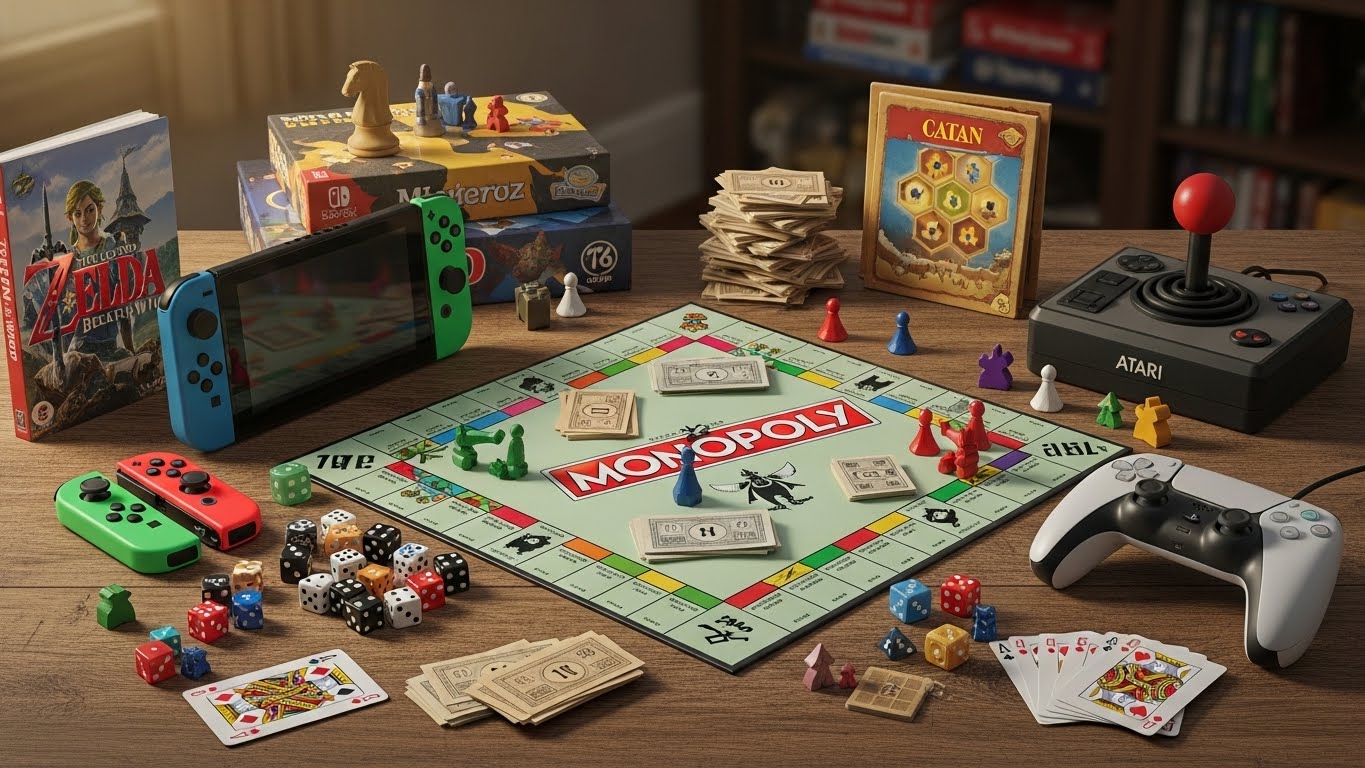
Board games are among the oldest and most enduring forms of entertainment. From Monopoly and Risk to Catan and Pandemic, board games have long been a way for families and friends to connect, strategize, and have fun. These games require players to think critically, plan their moves, and often work together or compete against each other to achieve their goals.
One of the key attractions of board games is their social nature. Unlike digital games, which can sometimes be isolating, board games provide a space for face-to-face interaction. The tactile experience of handling game pieces and rolling dice adds to the enjoyment, and many board games encourage conversation and laughter among players.
In recent years, board games have seen a resurgence, with new and innovative titles constantly being released. Games like Codenames, Ticket to Ride, and Exploding Kittens have introduced fresh mechanics and themes, drawing in both seasoned gamers and newcomers alike.
Card Games: Strategy, Luck, and Everything in Between
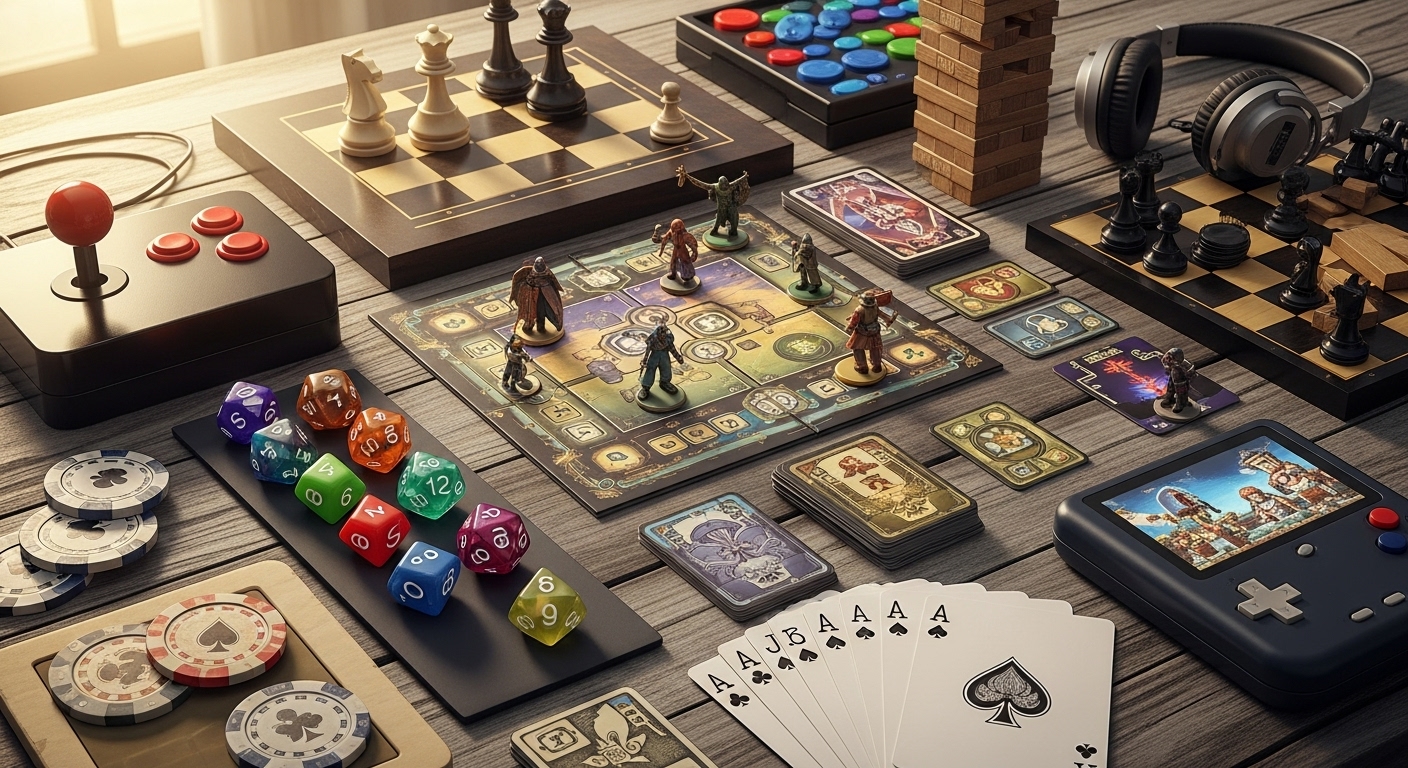
Card games have been a staple of gaming for centuries. Whether it’s a casual game of Poker or a strategic game of Bridge, card games combine elements of luck, strategy, and social interaction. Popular card games like Blackjack, Solitaire, and Hearts have been enjoyed for generations, while collectible card games like Magic: The Gathering and Yu-Gi-Oh! have created entire communities around trading, collecting, and battling with cards.
The rise of digital card games, such as Hearthstone and Gwent, has expanded the appeal of card-based gaming, allowing players to compete with others around the world without the need for a physical deck. These games often feature unique mechanics, such as customizable decks, character progression, and even eSports tournaments, elevating card games into a competitive and spectator-friendly activity.
Video Games: Digital Worlds of Infinite Possibilities
Video games, which began as simple pixelated experiences, have evolved into highly sophisticated and immersive digital worlds. Today’s video games offer stunning graphics, complex narratives, and expansive gameplay experiences that rival movies and television shows in terms of storytelling.
Role-playing games (RPGs), such as The Witcher 3 and Final Fantasy, allow players to take on the role of a character within a vast, open world, making decisions that impact the story and gameplay. Action-adventure games like The Legend of Zelda: Breath of the Wild and Uncharted offer cinematic experiences with puzzle-solving and exploration. Meanwhile, first-person shooters (FPS) like Call of Duty and Overwatch focus on fast-paced action and combat.
Multiplayer games like Fortnite, Minecraft, and League of Legends have changed the way we experience gaming, allowing players to connect with others around the world in real-time. These games often feature team-based mechanics, where collaboration and strategy are essential for success.
Mobile Games: Play Anytime, Anywhere
With the advent of smartphones, gaming has become more portable than ever. Mobile games like Candy Crush Saga, Clash of Clans, and Pokémon GO have captivated millions of people, offering easy-to-play, addictive experiences that can be enjoyed in short bursts throughout the day. These games are often free-to-play, supported by in-app purchases, making them accessible to a wide audience.
Mobile gaming has made gaming more inclusive, with people from all walks of life engaging in play. Whether on a train, at a café, or in a waiting room, mobile games allow players to immerse themselves in virtual worlds or complete quick challenges on the go.
The Impact of Games: Beyond Entertainment
While games are undeniably fun, their impact extends far beyond entertainment. Games are powerful tools for education, social connection, and even mental health.
Education Through Play
Games have long been used as educational tools, helping people learn new concepts in an engaging way. From math games that teach basic arithmetic to complex simulations like SimCity and Civilization, games can offer hands-on learning experiences that are more interactive and memorable than traditional methods.
Educational games also promote problem-solving, critical thinking, and creativity, skills that are essential in today’s fast-paced world. Many schools and institutions are now integrating games into their curricula, using them to teach everything from history to science to social studies.
Social Connection and Community
One of the most powerful aspects of gaming is its ability to bring people together. Online multiplayer games, in particular, allow players to connect with others around the world, forming friendships and communities based on shared interests. Social interaction in gaming spaces can create lasting bonds, as players work together toward common goals, engage in friendly competition, and communicate in real-time.
Mental Health and Emotional Well-being
While excessive gaming can lead to problems, games can also have therapeutic benefits. For some, video games offer a form of stress relief and escapism. Role-playing games (RPGs) and story-driven games provide players with an emotional outlet, allowing them to experience catharsis or explore different aspects of their personality.
Additionally, games are being used in therapeutic settings to treat anxiety, depression, and other mental health conditions. Games like Journey and That Dragon, Cancer address themes of loss, grief, and emotional healing, allowing players to engage with sensitive topics in a safe and supportive environment.