Introduction
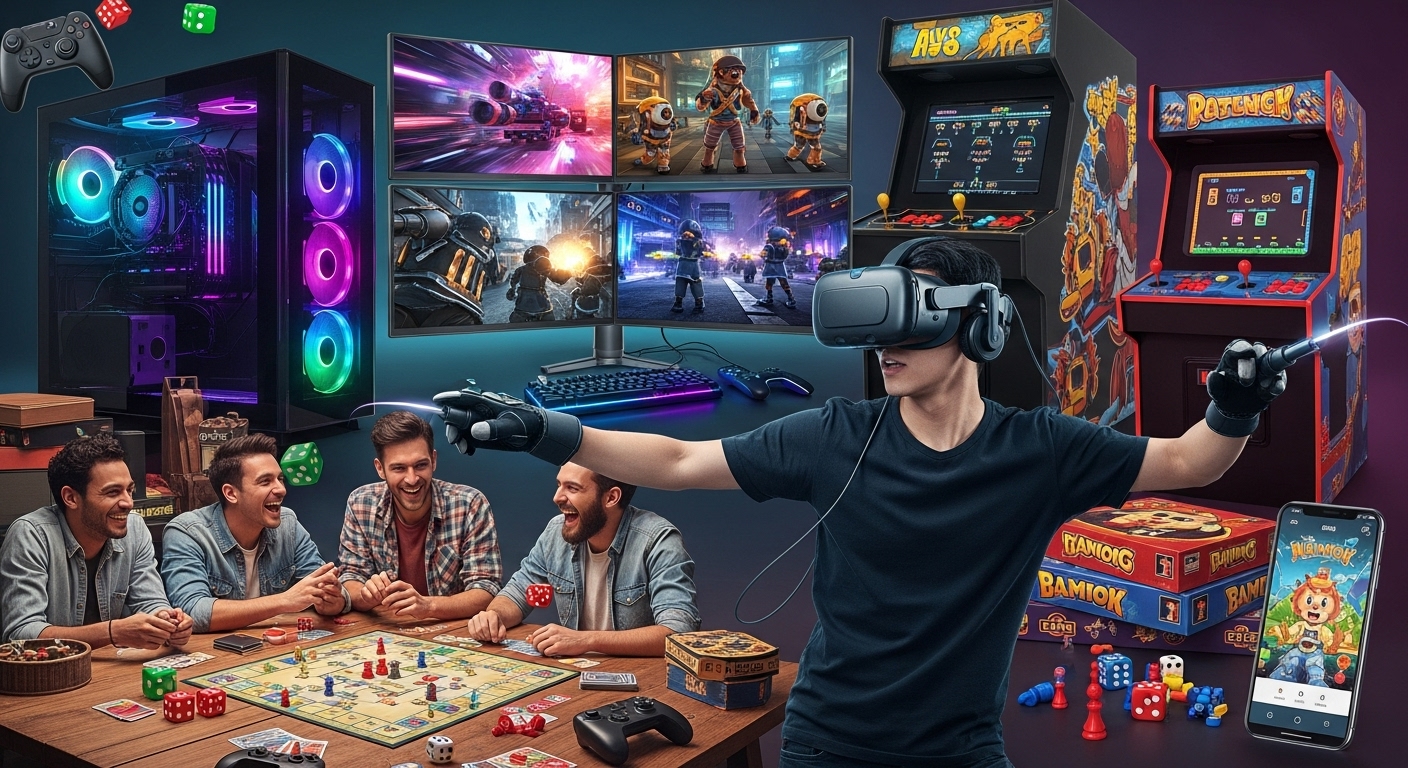
Games have always been an essential part of human life, from ancient board games carved into stone to the digital masterpieces that dominate screens today. They serve not only as a source of entertainment but also as a medium of creativity, strategy, and connection. Over the years, video games have evolved from simple pixelated experiences to expansive virtual worlds filled with intricate stories, lifelike graphics, and deep emotional resonance. The modern gaming industry stands as a global phenomenon, influencing art, education, culture, and even mental health.
This blog explores how games have transformed into one of the most influential creative industries in the world, why people are so deeply drawn to them, and how they continue to shape the way we think, learn, and connect with others.
The Evolution of Gaming
The story of gaming begins long before computers and consoles. Ancient civilizations played games like Senet in Egypt, Go in China, and chess in Persia and India, all designed to stimulate strategy and competition. These games were social, intellectual, and often spiritual.
With the rise of technology, games took a digital form in the mid-20th century. Early creations like Pong and Space Invaders introduced interactive entertainment to the world. The 1980s and 1990s saw the golden age of arcade machines, home consoles, and iconic characters like Mario, Sonic, and Link. These heroes not only defined gaming but also became cultural icons.
As technology advanced, so did the depth and complexity of games. The 2000s ushered in 3D graphics, online multiplayer experiences, and cinematic storytelling. Today, we live in an era of hyper-realism, where games like Red Dead Redemption, The Legend of Zelda, and God of War rival movies in emotional depth and visual artistry. The gaming industry now surpasses film and music combined in revenue, proving that play has become a dominant force in global entertainment.
Why People Love Games
The universal appeal of gaming lies in its ability to blend challenge, creativity, and escapism. Games offer a sense of control, progress, and accomplishment that can be deeply satisfying. Whether you are solving a puzzle, leading a virtual army, or exploring a mysterious world, the act of play stimulates curiosity and imagination.
For many players, games provide an escape from the pressures of reality. They offer a safe space to explore new identities, make bold choices, and live out adventures impossible in real life. Others are drawn to the competitive thrill of gaming, where skill and strategy determine victory. The rise of online multiplayer games has turned this competition into a social phenomenon, connecting millions of players around the world.
Games also provide emotional engagement. Players form attachments to characters, stories, and worlds that can move them to laughter, tears, or inspiration. Games like The Last of Us, Journey, and Life Is Strange have proven that interactive storytelling can be as emotionally impactful as any film or novel.
The Artistic Side of Games
Video games are not just entertainment—they are an art form. Every element, from design to music, contributes to an immersive experience. Artists, writers, and composers collaborate to craft visual masterpieces that engage all the senses.
Game design combines elements of architecture, cinematography, and psychology. Level designers carefully shape environments to evoke emotion and challenge players, while composers use music to heighten tension or create serenity. Visual artists bring life to characters and worlds through detailed animation and texture.
Games also allow for player expression. Unlike passive forms of art, games require participation. Players become co-creators in the experience, making choices that influence outcomes. This interactivity transforms games into living art, where each playthrough is unique.
The Rise of Online and Mobile Gaming
The internet revolutionized gaming forever. What began as solitary or local play has evolved into a vast, connected universe. Online gaming allows players to compete, collaborate, and communicate in real time. Massive multiplayer games like Fortnite, Call of Duty, and World of Warcraft have created digital communities where players from all over the world form friendships and rivalries.
Mobile gaming further expanded accessibility. With smartphones, games are now in everyone’s pocket, available anytime and anywhere. Titles like Candy Crush, PUBG Mobile, and Clash of Clans introduced gaming to millions who never owned a console. The simplicity, convenience, and variety of mobile games have made gaming a universal pastime.
This accessibility has democratized play, breaking down barriers of age, gender, and background. Gaming is no longer confined to a niche audience—it is a part of everyday life.
Games as Tools for Learning and Growth
Beyond entertainment, games have proven to be powerful tools for education and skill development. Educational games make learning engaging and interactive, transforming complex subjects into fun challenges. Students can explore history through simulation games or learn problem-solving through puzzle-based platforms.
Strategy and role-playing games teach decision-making, resource management, and critical thinking. Team-based games promote communication and collaboration. Even seemingly casual games improve reflexes, memory, and multitasking.
Moreover, many organizations now use gamification—the application of game principles in non-gaming contexts—to boost productivity, training, and engagement. By introducing rewards, challenges, and progression systems, workplaces and classrooms make learning and performance more motivating.
The Psychological Impact of Gaming
Gaming, like any form of media, affects the human mind in both positive and negative ways. On one hand, games can relieve stress, enhance creativity, and build confidence. They provide a sense of mastery and accomplishment that can improve mental well-being. Cooperative games strengthen social bonds, while immersive worlds offer emotional release.
On the other hand, excessive gaming can lead to issues like addiction, isolation, and disrupted routines. The key lies in balance. Responsible gaming involves setting limits, maintaining real-world connections, and viewing games as one part of a healthy lifestyle.
Psychologists have found that games can also be therapeutic. Certain games are designed to help individuals cope with anxiety, trauma, or depression. The immersive nature of gaming can offer comfort, distraction, and even healing through interactive storytelling.
Cultural Influence of Games
Games have become a central part of modern culture, shaping trends, language, and art. Memes, soundtracks, and characters from popular games often spill over into mainstream media. Gaming events draw huge audiences, and esports tournaments fill arenas much like traditional sports.
Cosplay and fan art celebrate the creativity inspired by gaming, while streaming platforms allow players to share their experiences with millions of viewers. The culture of gaming has evolved into a global community united by shared passion and imagination.
Moreover, games have become powerful platforms for storytelling and social commentary. Many titles address issues such as climate change, inequality, and identity, using interactivity to engage players emotionally and intellectually. Through this, games contribute meaningfully to cultural conversations and inspire empathy and awareness.
The Business of Gaming
The gaming industry is a colossal force in the global economy. With billions of dollars in annual revenue, it surpasses traditional entertainment industries. The development, marketing, and distribution of games create millions of jobs worldwide.
Independent developers, empowered by digital marketplaces, have found new ways to reach audiences without massive budgets. This has led to a rise in creativity and diversity in game design. From large studios producing blockbuster titles to small teams crafting artistic indie games, the ecosystem thrives on innovation.
Microtransactions, downloadable content, and subscription services have reshaped the business model of gaming. Players now enjoy continuous updates and evolving experiences long after a game’s initial release.
The Future of Gaming
The future of gaming promises even greater innovation. Virtual reality and augmented reality are expanding the boundaries of immersion. Players can now step inside their favorite worlds, interact with environments naturally, and experience sensations once limited to imagination.
Artificial intelligence will make games smarter, adapting dynamically to each player’s style and creating personalized experiences. Cloud gaming will eliminate hardware limitations, allowing anyone to stream high-quality games on any device.
The metaverse—a shared, persistent digital world—is the next frontier. It will merge social interaction, work, and play into a single interconnected space. In this future, games will not just be something we play; they will be places we live, create, and connect.
Conclusion
Games are more than just entertainment—they are a reflection of human creativity, curiosity, and connection. They challenge our minds, evoke our emotions, and bring people together across boundaries. From simple board games to complex virtual realities, the essence of play remains a fundamental part of who we are.
As technology continues to evolve, so will the ways we experience games. They will become more immersive, inclusive, and impactful. The future of gaming is not merely about better graphics or faster processors—it is about deeper storytelling, shared experiences, and the endless human desire to explore and create.
In the end, games remind us of something profoundly human: the joy of discovery, the thrill of challenge, and the power of imagination.