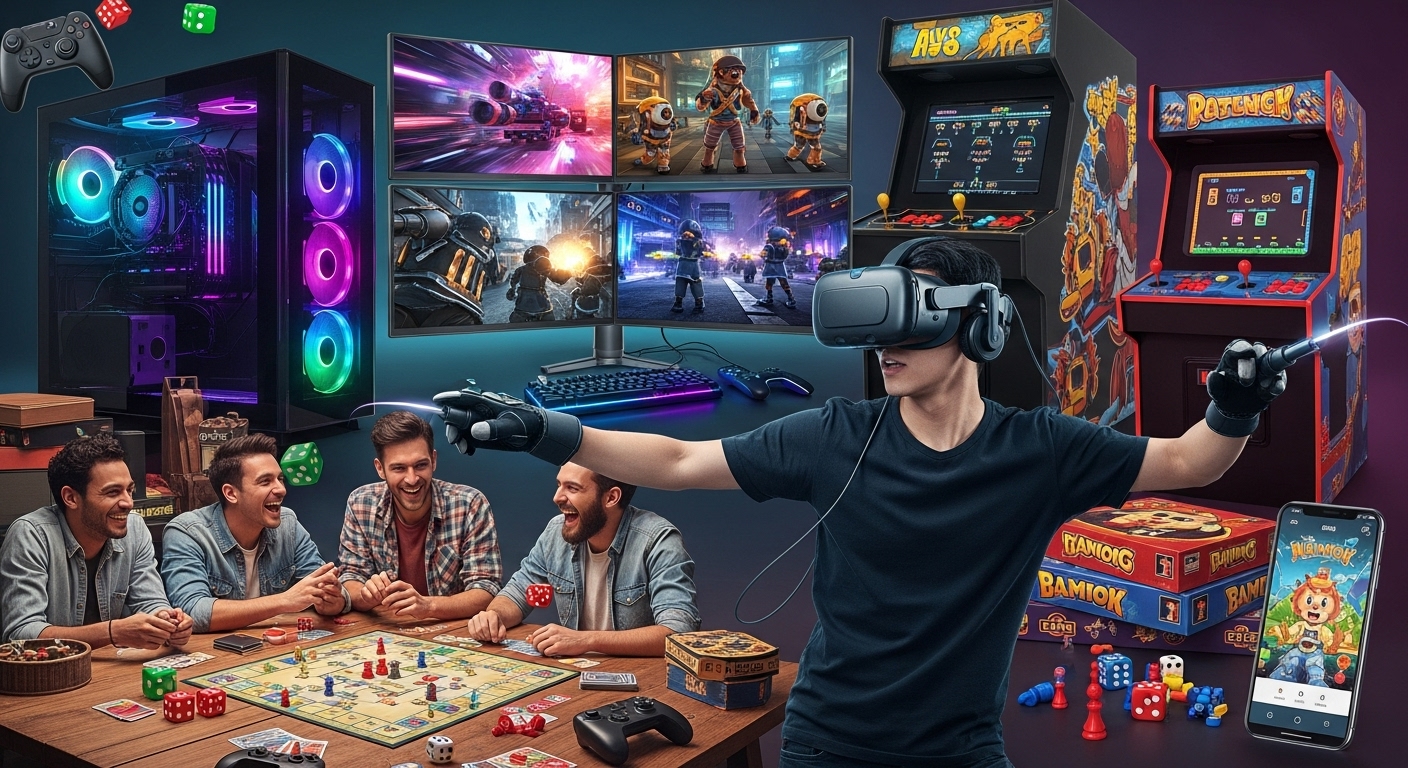

Introduction: Games as a Cultural Phenomenon
Games have always been more than just a pastime. From ancient board games to modern digital experiences, they have played a crucial role in shaping culture, education, and entertainment. Games provide a unique blend of challenge, strategy, creativity, and social interaction. In the 21st century, with technological advancements and global connectivity, games have transformed into immersive experiences that engage millions of players worldwide. Understanding the evolution and impact of games reveals how they have become a central part of human creativity and social life.
The Origins of Games
The history of games dates back thousands of years. Early societies developed board games like Senet in Egypt and the Royal Game of Ur in Mesopotamia. These games were often tied to religion, strategy, and social hierarchy. Card games and chess evolved later, emphasizing skill, strategy, and intellectual challenge. Physical games and sports were also prominent, serving as tools for social bonding, physical training, and entertainment. These early forms of play laid the foundation for modern games by emphasizing competition, creativity, and social interaction.
The Rise of Video Games
The 20th century saw the emergence of video games, revolutionizing the way people interact with play. The first arcade games and home consoles introduced interactive experiences that combined technology with entertainment. Games like Pong and Space Invaders captured the imagination of a generation, creating a new form of entertainment. The introduction of home consoles in the late 1970s and 1980s made video games accessible to millions, transforming gaming from a niche hobby into a mainstream cultural phenomenon.
Gaming Platforms and Accessibility
Modern gaming spans multiple platforms, including PCs, consoles, and mobile devices. Each platform offers unique experiences and caters to different types of players. PC gaming allows for complex simulations, strategy games, and modding communities. Consoles offer immersive experiences with exclusive titles and user-friendly interfaces. Mobile gaming has democratized play, providing access to casual games and massive multiplayer experiences to anyone with a smartphone. The variety of platforms ensures that gaming is inclusive, engaging a diverse audience across age groups and regions.
The Impact of Multiplayer and Online Gaming
Multiplayer and online gaming have transformed the social aspect of play. Games now allow players to connect, compete, and collaborate with others globally. Online platforms and multiplayer modes have created communities, eSports, and social interactions that extend beyond the game itself. Players can form teams, strategize together, and engage in global competitions. This connectivity fosters collaboration, communication, and cultural exchange, making games a powerful tool for social engagement in the digital era.
eSports: The Professionalization of Gaming
eSports has elevated gaming from casual entertainment to professional competition. Players train rigorously, develop strategies, and compete in tournaments with significant prize pools. Titles like League of Legends, Dota 2, and Counter-Strike have developed professional leagues with international followings. eSports combines skill, teamwork, and strategy, creating a spectator sport that attracts millions of viewers. This professionalization has legitimized gaming as a career path and has expanded the industry, influencing technology, media, and marketing.
The Role of Storytelling in Games
Games are unique in their ability to combine interactivity with storytelling. Narrative-driven games immerse players in rich worlds, complex characters, and engaging plots. Role-playing games, adventure games, and simulation titles often focus on story as much as gameplay. This fusion of narrative and interaction allows players to shape the outcome, make choices, and experience consequences, creating an emotional and intellectual connection that traditional media cannot replicate. Storytelling in games has become a vital aspect of modern entertainment, influencing films, literature, and interactive media.
Educational and Cognitive Benefits of Gaming
Games are not just entertainment; they also offer educational and cognitive benefits. Strategy games, puzzles, and simulations enhance problem-solving, critical thinking, and decision-making skills. Educational games introduce subjects like math, science, and history in interactive formats, making learning engaging and effective. Multiplayer games foster teamwork, communication, and leadership skills. The cognitive and social benefits of gaming demonstrate its potential as a learning tool and a means to develop skills applicable in real-life situations.
The Influence of Technology on Gaming
Technological advancements have expanded the possibilities of gaming. Graphics engines, virtual reality, and artificial intelligence have made games more immersive, realistic, and responsive. Cloud gaming allows players to access high-quality games without powerful hardware, increasing accessibility. Motion sensors, haptic feedback, and augmented reality blur the line between physical and digital play, creating experiences that engage multiple senses. Technology continues to drive innovation in game design, storytelling, and interactivity, ensuring that gaming remains a dynamic and evolving form of entertainment.
Mobile Gaming and Casual Play
Mobile gaming has transformed the accessibility and reach of games. Casual games like puzzle challenges, card games, and strategy titles provide entertainment for short sessions while on the go. Mobile devices enable millions of players worldwide to participate in gaming without the need for expensive hardware or consoles. This accessibility has broadened the audience, attracting new demographics and creating a global gaming culture. Mobile gaming also encourages social interaction through leaderboards, social media integration, and multiplayer features.
The Psychology of Games
Understanding why people play games provides insight into their cultural significance. Games satisfy the human desire for challenge, achievement, and mastery. They provide a safe space to experiment, take risks, and learn from failure. Reward systems, achievements, and progression mechanics motivate players to continue engaging. Games also offer social validation, competition, and collaboration, appealing to human instincts for recognition and connection. The psychological impact of games demonstrates their role as a meaningful and engaging form of entertainment.
Games as Art and Cultural Expression
Games have evolved into a form of artistic and cultural expression. Visual design, music, narrative, and interactivity combine to create immersive experiences that rival traditional art forms. Indie games often explore unique themes, experimental mechanics, and social commentary, demonstrating creativity and innovation. Games reflect societal values, cultural narratives, and personal experiences, making them an important medium for expression. The recognition of games as art has led to exhibitions, awards, and critical analysis, further solidifying their cultural significance.
Social and Community Impact of Gaming
Gaming fosters communities that connect players around shared interests. Online forums, streaming platforms, and multiplayer environments create spaces for interaction, collaboration, and mentorship. Gamers form friendships, professional relationships, and creative collaborations through shared gaming experiences. Community-driven content, mods, and tournaments further enhance engagement and creativity. The social impact of gaming demonstrates its ability to bring people together, promote inclusion, and foster cultural exchange in a digital world.
The Challenges Facing the Gaming Industry
Despite its growth, the gaming industry faces challenges. Issues such as addiction, screen time management, and online harassment require attention and solutions. Ethical considerations around loot boxes, microtransactions, and monetization practices have sparked debates and regulations. Balancing innovation with responsible design and user well-being is essential. Addressing these challenges ensures that gaming remains a positive, engaging, and sustainable form of entertainment for players of all ages.
The Future of Gaming
The future of gaming promises continued innovation and evolution. Virtual reality, augmented reality, cloud gaming, and AI-driven experiences will redefine interactivity and immersion. Games will increasingly blend entertainment, education, and social connection. Mobile platforms will expand access, while eSports will continue to professionalize and globalize. Games will remain a reflection of cultural trends, technological advancements, and human creativity, shaping the entertainment landscape for generations to come.
Conclusion: The Enduring Power of Play
Games are more than a pastime; they are a cultural, social, and technological phenomenon. They entertain, educate, and connect people across the globe. From ancient board games to immersive digital worlds, gaming has evolved into a dynamic form of expression and interaction. The industry continues to grow, driven by technological innovation, creative storytelling, and social engagement.
As gaming evolves, it will continue to influence culture, education, technology, and social interaction. The power of games lies not only in their ability to entertain but also in their capacity to inspire, challenge, and connect people. Understanding and appreciating games as a multifaceted medium reveals their lasting significance in human society. Games are, and will remain, a vital part of our cultural and digital landscape.