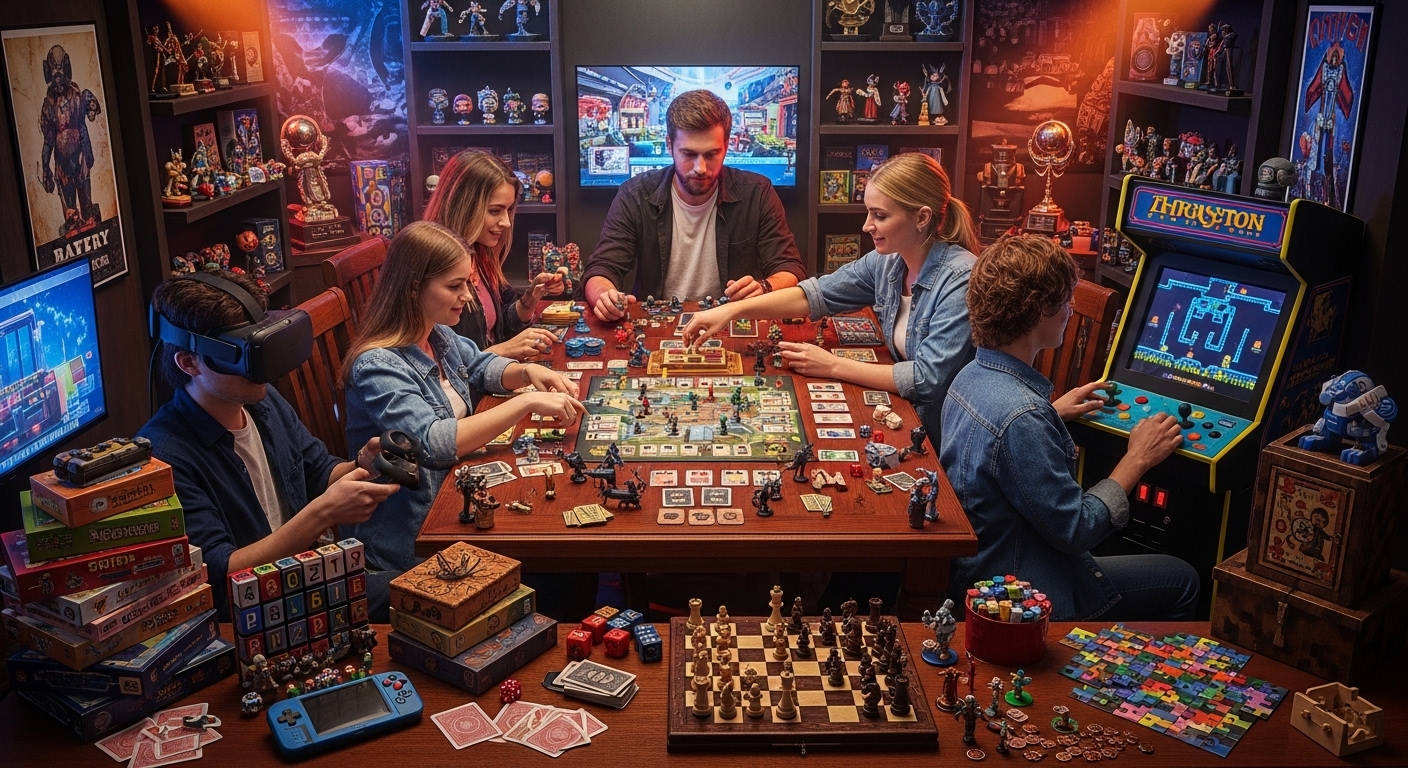

The world of games has seen unprecedented growth in recent years, becoming one of the largest and most influential forms of entertainment across the globe. What started as simple, pixelated challenges on early consoles has transformed into a sophisticated, multi-billion-dollar industry that spans across platforms, genres, and cultures. From mobile apps and online multiplayer experiences to virtual reality (VR) and augmented reality (AR), the gaming world continues to evolve at a rapid pace. In this blog, we will explore the journey of games, their cultural impact, technological innovations, and what the future holds for the gaming industry.
The Evolution of Video Games
Video games, as we know them today, have a fascinating history that traces back to the 1950s when the first experiments with interactive computer graphics took place. However, it was in the 1970s that the gaming industry truly began to take shape with the creation of arcade machines such as Pong and Space Invaders. These early games were simple yet captivating, drawing players into arcades and laying the foundation for the industry’s growth.
In the 1980s, home gaming consoles like the Nintendo Entertainment System (NES) and Sega Genesis revolutionized how people interacted with video games. With the advent of 16-bit graphics and improved gameplay mechanics, gaming was no longer just an arcade activity. Consoles brought gaming into homes worldwide, providing players with an affordable way to play high-quality games in their own living rooms. Popular franchises like Super Mario, The Legend of Zelda, and Sonic the Hedgehog emerged during this era and have since become iconic staples of the gaming world.
The 1990s saw further technological advancements, particularly in 3D graphics and CD-ROM storage, allowing for richer, more immersive game worlds. Titles like Doom and Final Fantasy VII showcased the potential of more detailed environments and complex narratives, marking the beginning of the era of modern gaming. PC gaming also gained traction during this period, with games such as Warcraft and StarCraft introducing multiplayer gaming that would lay the foundation for the esports scene.
With the arrival of the 2000s and the PlayStation 2, Xbox, and Nintendo Wii, gaming moved into the realm of high-definition graphics, online multiplayer gaming, and motion controls. Online gaming became more mainstream, as games like World of Warcraft and Halo fostered massive online communities. By this time, gaming was firmly established as a global entertainment medium, with millions of players from all corners of the world connecting through the internet.
The 2010s and beyond have been defined by the rise of mobile gaming, cloud gaming, and the increasing integration of augmented and virtual reality. Mobile gaming has become an essential part of everyday life for millions of people, thanks to smartphones that provide easy access to games like Candy Crush, PUBG Mobile, and Fortnite. These games cater to a wide range of players, from casual gamers to competitive enthusiasts, all enjoying gaming experiences on the go. Furthermore, virtual reality has started to carve its niche in gaming with platforms like Oculus Rift, offering players fully immersive experiences in virtual worlds.
The Different Genres of Games
One of the reasons games have become so universally popular is the wide variety of genres available, catering to all tastes, preferences, and playstyles. The gaming industry offers something for everyone, whether they are interested in action, strategy, puzzle-solving, or storytelling. Below are some of the most popular game genres:
1. Action Games
Action games are perhaps the most iconic and diverse genre, encompassing a variety of subgenres such as platformers, beat ’em ups, and hack-and-slash games. These games are typically fast-paced, with players controlling characters who engage in physical challenges like combat or obstacle courses. Popular action games include Super Mario, Grand Theft Auto, and Assassin’s Creed. These games often emphasize reflexes, quick thinking, and hand-eye coordination.
2. Role-Playing Games (RPGs)
RPGs focus on storytelling, character development, and exploration, often set in rich, fantasy worlds. Players control a protagonist (or group of characters) and guide them through an epic narrative while making choices that affect the outcome of the story. RPGs are known for their deep lore, character customization, and expansive open worlds. Games like The Elder Scrolls V: Skyrim, The Witcher 3: Wild Hunt, and Final Fantasy are prime examples of this genre.
3. Shooter Games
Shooter games involve combat using firearms or other projectile weapons. They can be played from either a first-person (FPS) or third-person perspective. FPS games like Call of Duty, Counter-Strike, and Overwatch have garnered large, competitive communities. Multiplayer online shooters, in particular, are a cornerstone of the esports scene, offering fast-paced, adrenaline-pumping action that appeals to both casual and hardcore gamers.
4. Strategy Games
Strategy games challenge players to think critically and plan ahead. These games involve tactical decision-making, resource management, and complex gameplay mechanics. StarCraft, Age of Empires, and Civilization are some of the most notable strategy games, each offering a unique take on strategic warfare, empire-building, and resource allocation. Real-time strategy (RTS) and turn-based strategy (TBS) are the two major subgenres in this category.
5. Sports and Racing Games
Sports games simulate real-world sports like football, basketball, soccer, and racing, offering players the chance to compete in their favorite athletic events. Racing games such as Gran Turismo and Need for Speed provide high-speed, action-packed experiences, while sports simulations like FIFA and NBA 2K offer realistic recreations of professional leagues. These games are beloved by both casual gamers and sports fans alike.
6. Simulation Games
Simulation games let players experience real-world activities in virtual environments. These games can range from life simulations like The Sims, where players control and develop the lives of virtual characters, to business simulations like SimCity or RollerCoaster Tycoon, which focus on managing complex systems. Microsoft Flight Simulator takes simulation to a new level, offering an incredibly realistic flying experience.
7. Puzzle and Casual Games
Casual games focus on simple mechanics that are easy to pick up and play, often requiring less time and commitment than other genres. Puzzle games like Tetris and Candy Crush are perfect for short gaming sessions and can be highly addictive due to their simple yet challenging gameplay. These games are often available on mobile platforms, making them easily accessible to a broad audience.
8. Horror Games
Horror games are designed to evoke fear and tension in players, often through eerie atmospheres, jump scares, and dark narratives. Popular horror titles such as Resident Evil, Silent Hill, and Amnesia: The Dark Descent immerse players in chilling environments where survival is the primary goal. The sense of dread and psychological horror is what makes this genre stand out, creating intense and memorable experiences.
The Impact of Games on Society
Games have become much more than a form of entertainment; they have had a profound impact on culture, social interactions, and even education. In the past decade, gaming has entered the mainstream consciousness, influencing how people communicate, compete, and collaborate.
1. Social Connectivity
Online multiplayer games have brought people from all over the world together, creating virtual communities that bond over shared experiences. Games like Fortnite, World of Warcraft, and League of Legends enable players to form friendships and participate in collaborative gameplay, leading to a sense of belonging. Gaming communities are often vibrant, with players discussing strategies, sharing fan content, and even forming professional teams for esports competitions.
2. Esports and Competitive Gaming
Esports, or competitive gaming, has grown from a niche hobby into a global phenomenon, with professional tournaments attracting millions of viewers and offering substantial prize money. Games like Dota 2, Counter-Strike, and Overwatch have established esports leagues with dedicated fan bases, while streamers on platforms like Twitch and YouTube have built careers around their gaming prowess. Esports has become a legitimate career path for talented players, commentators, and content creators.
3. Educational and Therapeutic Benefits
Games are increasingly being used in education and therapy. Many educational games teach players subjects like math, history, and problem-solving through engaging gameplay. Serious games, which are designed for educational purposes, can be found across various disciplines, helping students engage with difficult concepts in a fun and interactive way.
Therapeutically, games have been used to help treat conditions like anxiety, depression, and post-traumatic stress disorder (PTSD). Virtual reality games, in particular, have been employed in exposure therapy, allowing patients to confront fears and traumatic experiences in a safe, controlled environment.
The Future of Gaming
As technology continues to evolve, so too does the world of gaming. The future of gaming looks promising, with trends like cloud gaming, VR, AR, and AI set to redefine the industry.
1. Cloud Gaming
Cloud gaming allows players to stream games directly from remote servers, bypassing the need for powerful gaming hardware. This makes high-quality games accessible to a broader audience, even on low-end devices like smartphones and tablets. Services like Google Stadia, Xbox Cloud Gaming, and NVIDIA GeForce Now are already making waves in this space, offering gamers the flexibility to play anywhere without the need for expensive consoles or gaming PCs.