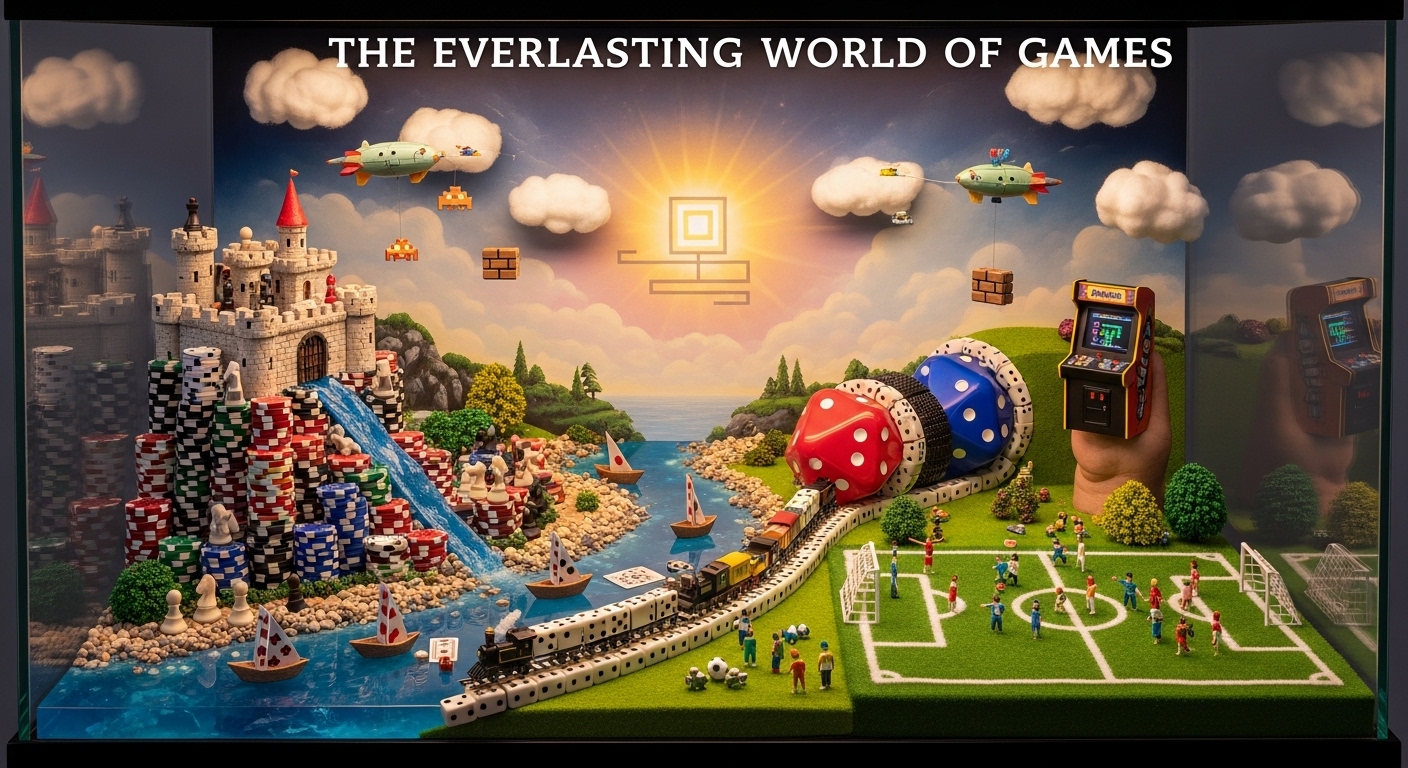

In the vast universe of gaming, there’s a constant stream of new titles vying for attention, many of them offering highly polished graphics and gameplay. However, beyond the mainstream hits, there exists a realm of games that are unconventional, unique, and genuinely out-of-the-box. These titles offer something different—an experience that breaks from the norm and introduces fresh ideas. Let’s dive into the world of these creative games that challenge traditional gaming conventions.
The Value of Uniqueness in Gaming
In an industry often dominated by sequels and remakes, the value of games that stand out cannot be overstated. Unique games offer new perspectives, innovative mechanics, and unexpected storytelling. These games may not always have the blockbuster budgets or massive player bases, but they often leave a lasting impact on those who encounter them. They push the boundaries of what games can be, allowing players to explore uncharted territories and rethink how games can be played.
The Impact of Indie Games
Many of the most unique gaming experiences come from the indie game scene. Independent developers often have more creative freedom to experiment, unbound by the commercial pressures of large studios. Take, for instance, Journey—a stunning visual and emotional exploration of human connection—or Inside, a dark, atmospheric puzzle-platformer that tells its story through its world rather than through dialogue.
Indie games like these can resonate with players on a deeper level because they often take risks that mainstream titles might not dare to. These games don’t just focus on entertainment; they aim to evoke emotions, challenge perceptions, and sometimes, even spark philosophical reflection.
Narrative-Driven Games: More Than Just Play
The world of narrative-driven games is another area where uniqueness truly shines. In games like The Stanley Parable or What Remains of Edith Finch, players find themselves immersed in environments that feel like interactive stories. These games might not follow the traditional linear path most games take but instead offer players choices that impact the unfolding of the narrative in surprising ways. The gameplay is just as much about experiencing a story as it is about completing objectives.
This shift in focus from pure gameplay mechanics to storytelling offers a unique perspective. Instead of merely trying to “win,” players are invited to reflect on the broader meaning behind their actions and decisions. These games allow players to experience a more nuanced form of play that emphasizes narrative depth over traditional mechanics.
Experimental Gameplay Mechanics
Another exciting aspect of unique games is their willingness to explore experimental gameplay mechanics. Papers, Please, for example, challenges players to assume the role of a border crossing immigration officer, making difficult moral decisions as they process documents. The game’s design compels players to consider the consequences of their actions in a way that is seldom seen in more traditional titles.
Similarly, Antichamber plays with the concept of spatial puzzles, where the rules of physics and logic are constantly bent and twisted. The game requires players to rethink the very way they perceive the space around them, offering a truly unique and often bewildering experience. These unconventional mechanics are not just about difficulty but about reimagining how games can interact with their players.
The Role of Art and Aesthetics in Unconventional Games
For many unique games, their visual and auditory design is just as important as the gameplay. Titles like Gris and Oxenfree use art and music to convey emotion and atmosphere in ways that traditional games often overlook. These games are as much about feeling as they are about playing. The aesthetic choices in these titles are not just for show; they actively contribute to the storytelling, creating a deep connection between the player and the world.
In games like Hyper Light Drifter, pixel art meets modern design in a visually striking way, while the haunting soundtrack further amplifies the emotional journey. The unique use of color, light, and sound can transform the gaming experience from an enjoyable pastime into a truly immersive experience, one that lingers long after the game has ended.
Conclusion: Embracing the Unexpected
The world of gaming is vast and ever-evolving, but sometimes, the most extraordinary experiences lie outside the realm of the typical. Whether it’s through innovative gameplay, emotional storytelling, or striking visual designs, unique games offer a refreshing escape from the norm. They remind us that video games can be more than just entertainment—they can be art, a conversation, and a means of personal reflection.
In a world where many titles follow the same formula, these games encourage us to explore, think, and feel in new and unexpected ways. And that’s the magic of gaming—there’s always something new to discover.