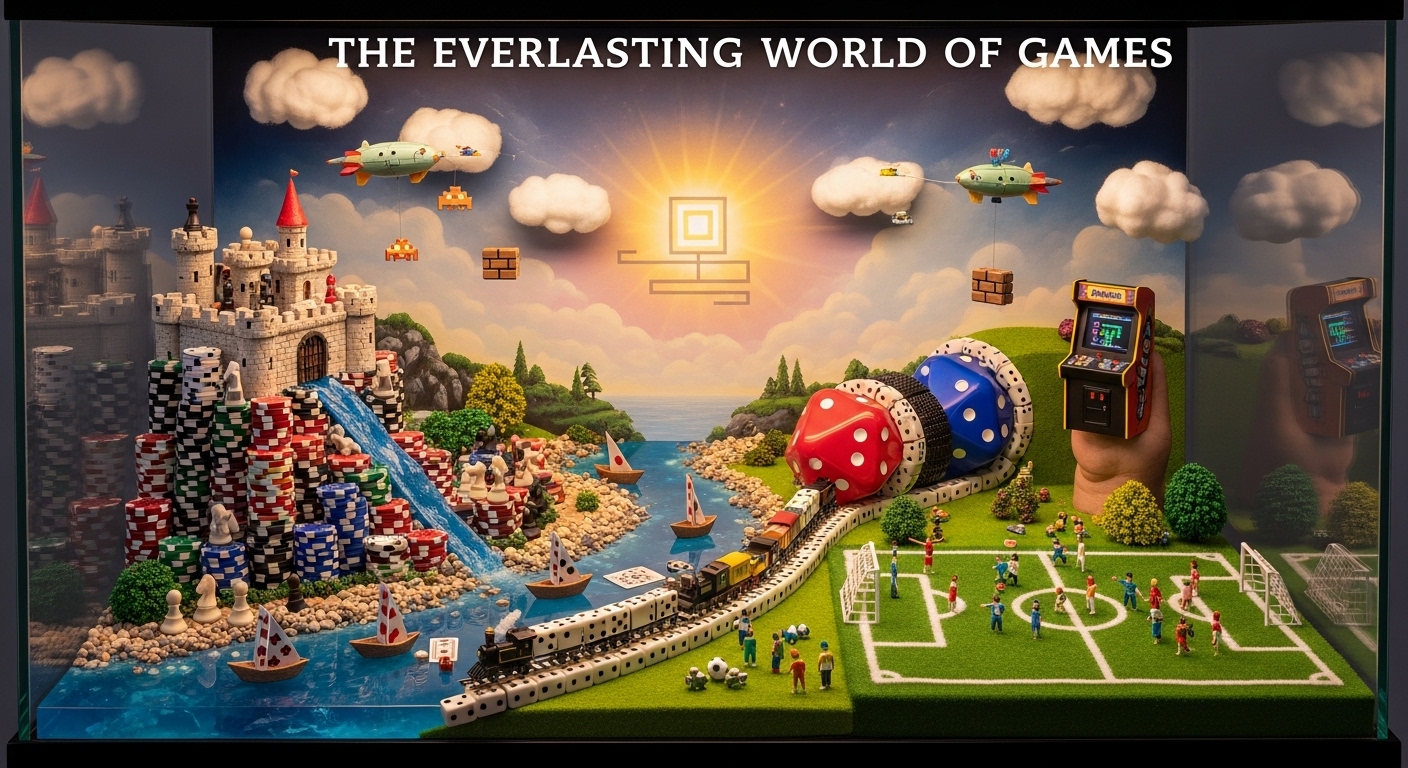
Games have been an inseparable part of human life since the dawn of civilization. From the earliest board games carved into ancient stone to the hyper-realistic virtual worlds of modern gaming, the desire to play, compete, and create has always defined humanity’s social and creative spirit. Games are not merely entertainment; they are reflections of culture, imagination, and progress. They reveal who we are, what we value, and how we express ourselves. This blog explores the vast universe of games—how they have evolved, what they mean to us, and why they remain a cornerstone of human experience.
The Ancient Origins of Games
Long before the digital age, ancient civilizations were already indulging in games that required intellect, strategy, and chance. Archaeologists have discovered game boards in the ruins of Mesopotamia and Egypt that date back over 5,000 years. Games such as Senet and The Royal Game of Ur were more than just diversions—they held cultural and spiritual significance. Senet, for instance, was believed to represent the journey of the soul through the afterlife.
Similarly, ancient China gave us Go, a game of territorial conquest and strategy that remains popular even today. The simplicity of its rules contrasts sharply with its deep complexity, making it a metaphor for balance, patience, and intellect. In India, early versions of chess and dice-based games emerged, demonstrating how games reflected the philosophical and tactical thinking of a society.
Games were also social instruments. They brought people together across generations and classes. A nobleman and a servant could play the same board game, if only for a brief moment of equality, united by the rules of play rather than the rules of society.
The Birth of Modern Board Games
The modern era of games began in the 19th century, with the rise of mass production and printed materials. Families could now afford beautifully designed board games that encouraged imagination and moral lessons. One of the earliest commercial successes was The Mansion of Happiness, which promoted virtues through gameplay. Later, Monopoly captured the spirit of capitalism and urban life, turning economics into a game of luck and strategy.
As technology advanced, so did the complexity and creativity of board games. New genres emerged—mystery, adventure, war, and fantasy. Games like Clue and Risk combined storytelling with tactical thinking. They inspired generations of players to think critically, plan ahead, and compete fairly.
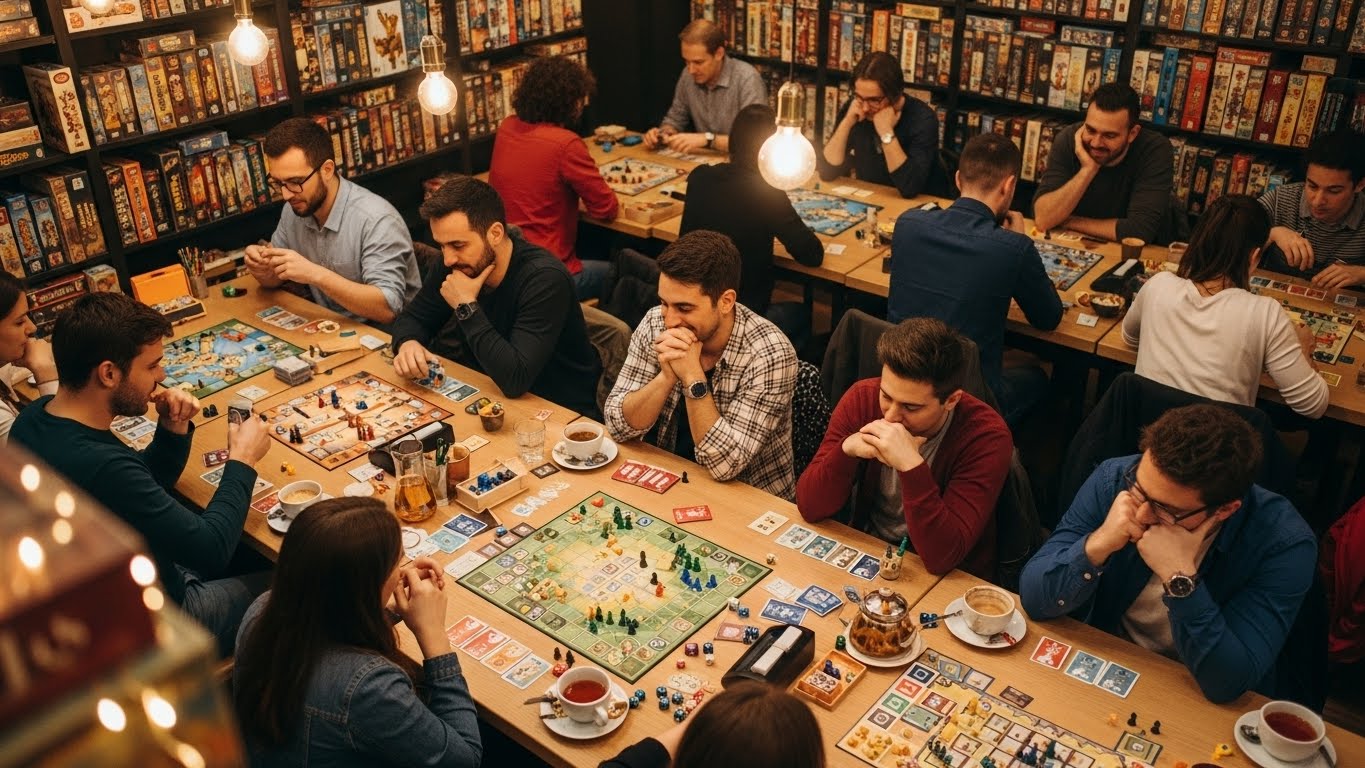
What makes board games timeless is their tactile nature. The feeling of rolling dice, moving pieces, and reading cards creates a physical connection that digital games sometimes lack. Even today, in an era dominated by screens, board games continue to thrive. They foster face-to-face interaction, laughter, and shared memories—things that technology often struggles to replicate.
The Rise of Digital Gaming
The second half of the 20th century marked a revolution in human recreation: the birth of electronic games. In the 1950s and 1960s, scientists and programmers began experimenting with computer simulations and interactive entertainment. The first video games, such as Tennis for Two and Spacewar!, were rudimentary by today’s standards but groundbreaking in their time.
Then came Pong in 1972, a simple tennis-like game that captured the world’s attention. With two paddles and a bouncing pixel, Pong opened the door to an entirely new industry. Arcade machines became cultural icons of the 1970s and 1980s, filling malls and game centers with flashing lights, electronic sounds, and friendly competition.
Home consoles soon followed. Companies like Atari, Nintendo, and Sega transformed living rooms into digital playgrounds. The 8-bit and 16-bit eras introduced characters who would become legends: Mario, Sonic, Link, and Pac-Man. Each game was a small universe where imagination came to life.
The video game was no longer just a pastime—it was art in motion, an interactive narrative that invited players to explore, solve, and dream.
The Expansion of Genres and Creativity
As technology evolved, so did the variety of games available. Developers began experimenting with new genres, giving players more freedom than ever before. Action, adventure, strategy, simulation, and role-playing games each found their audience.
Role-playing games (RPGs) like Final Fantasy and The Elder Scrolls allowed players to create their own characters, make moral choices, and shape unique stories. First-person shooters such as Doom and Half-Life redefined immersion, placing players directly in the action. Meanwhile, strategy games like Age of Empires and Civilization brought history and empire-building to life.
The beauty of games lies in their diversity. Some players seek adrenaline in competition; others seek peace in creativity. Games like The Sims turned everyday life into a playground, while Minecraft gave users limitless freedom to build and explore. Indie developers also began to rise, crafting heartfelt experiences that focused on emotion rather than spectacle.
This creative explosion transformed gaming from a niche hobby into a global cultural force. It became a medium capable of storytelling, education, and artistic expression.
The Cultural Impact of Games
Games have shaped popular culture in profound ways. The characters, music, and worlds of gaming have become as recognizable as those in film or literature. Franchises like Pokémon, Zelda, and Call of Duty are now household names. Their influence extends beyond consoles—into movies, merchandise, and even education.
Gaming has also created communities. Millions of players connect online, forming friendships across continents. Esports tournaments draw audiences larger than some traditional sports events. Competitive gaming requires skill, teamwork, and dedication, proving that video games are as legitimate a sport as any physical competition.
However, the cultural impact of gaming is not only external; it is deeply personal. Games can inspire empathy, courage, and reflection. Titles like Journey, The Last of Us, and Life is Strange explore themes of love, loss, and survival. They remind us that games are more than pixels—they are experiences that move the heart and challenge the mind.
The Science and Psychology Behind Games
Why do humans love games so much? Psychologists suggest that play is essential for learning, creativity, and emotional development. Games activate the brain’s reward system, releasing dopamine and creating feelings of achievement. They allow players to experiment, fail safely, and try again—skills that mirror real-life growth.
Games also foster problem-solving and strategic thinking. Whether it’s managing resources in a city-building game or planning moves in a chess match, players develop cognitive flexibility and focus. Multiplayer games encourage teamwork and communication, teaching players how to cooperate and lead.
Moreover, games can serve therapeutic purposes. They are used in education, rehabilitation, and even mental health treatment. Playing can reduce stress, improve mood, and enhance social connection. The boundary between play and learning has blurred, giving rise to a new field known as “gamification,” where game mechanics are used in real-world tasks to motivate people toward goals.
The Evolution of Technology in Gaming
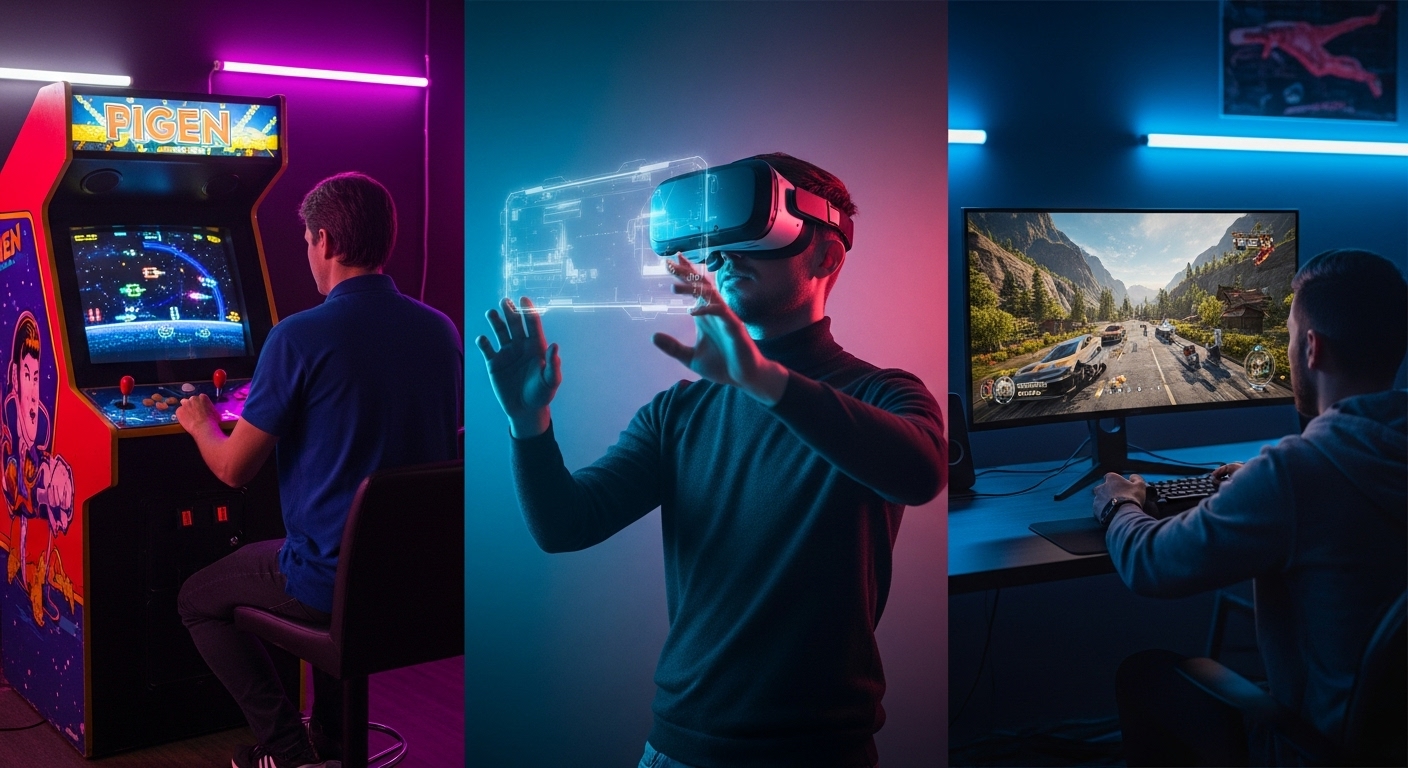
The technological transformation of gaming is nothing short of astounding. From pixelated screens to photorealistic environments, each decade has brought new innovations. Graphics processing, artificial intelligence, and virtual reality have elevated gaming into a form of immersive art.
Modern games are no longer confined to consoles or PCs. Mobile gaming has democratized access, allowing millions to play anywhere and anytime. The smartphone became the world’s most popular gaming device, bridging the gap between casual and hardcore players.
Cloud gaming is now redefining accessibility further. Players no longer need expensive hardware; they can stream high-quality games directly over the internet. Meanwhile, artificial intelligence enhances storytelling, making non-player characters (NPCs) behave in more realistic and adaptive ways.
Virtual reality (VR) and augmented reality (AR) have taken immersion to new heights. With a headset, a player can step inside another world—walk through medieval castles, pilot spaceships, or paint in three-dimensional space. The line between reality and imagination continues to blur.
The Social Side of Gaming
Gaming is no longer a solitary experience. The rise of online multiplayer games has built vast communities where players form friendships, teams, and rivalries. Titles like Fortnite, League of Legends, and PUBG have become global phenomena, hosting millions of active players daily.
Online games are digital societies, complete with their own cultures, economies, and etiquette. Players trade items, create content, and even hold virtual events. Social interaction is at the core of modern gaming—people play not just for the game itself, but for the shared experiences it offers.
Streaming platforms have also changed how we interact with games. Players are no longer just consumers—they are performers, storytellers, and influencers. Watching others play has become a new form of entertainment, bridging the gap between player and audience. This social aspect has turned gaming into a collective experience, uniting people across languages and borders.
The Artistic Value of Games
Some argue that games are not art. Yet when one examines their design, storytelling, music, and emotion, it becomes clear that games are one of the most complex and powerful art forms of the modern age.
A game is a blend of literature, painting, cinema, and architecture. It tells stories through environments, uses color and light to evoke emotion, and invites the player to participate in its creation. Games like Shadow of the Colossus, Bioshock, and Gris are celebrated not only for their gameplay but for their artistic vision.
Music, too, plays an essential role. Iconic game soundtracks have become timeless pieces of art, capable of stirring nostalgia and emotion. The combination of visual design, narrative depth, and interactivity makes games unique—they allow the audience to shape the story through their own choices.
The Challenges Facing the Gaming Industry
Despite its success, the gaming world faces several challenges. Issues such as addiction, online toxicity, and representation continue to be debated. Game developers are increasingly aware of the need for inclusivity and mental well-being.
Another challenge lies in the balance between monetization and player experience. Microtransactions, loot boxes, and pay-to-win systems have sparked controversy. Players demand fairness, creativity, and respect from the industry.
Furthermore, as technology advances, ethical questions arise about data privacy, AI-driven content, and the environmental cost of large-scale gaming infrastructure. The industry must evolve responsibly to ensure that innovation does not come at the expense of integrity.
The Future of Games
What lies ahead for games? The future is both thrilling and unpredictable. Advances in artificial intelligence, virtual reality, and brain-computer interfaces promise experiences we can barely imagine. Games will become even more personal, adaptive, and emotionally rich.
We may one day step into fully simulated worlds where every action, choice, and emotion matters. Educational games will revolutionize learning, while therapeutic games will aid healing. The boundaries between work, play, and creativity will continue to blur.
Most importantly, games will remain a reflection of humanity—our dreams, fears, and imagination. They will continue to evolve as we do, serving as mirrors of our societies and as doorways to new realities.
Conclusion
Games are not just diversions; they are a celebration of human creativity, curiosity, and connection. From ancient stones to digital screens, they have journeyed alongside us, shaping the way we learn, compete, and dream.
They remind us that play is not childish—it is essential. Through games, we explore not only worlds but ourselves. They teach us resilience, spark imagination, and connect us to others in ways that transcend language or culture.
The story of games is the story of humanity—ever evolving, endlessly fascinating, and filled with infinite possibilities. Whether on a board, a screen, or in virtual space, the spirit of play will continue to guide our journey through imagination and innovation.