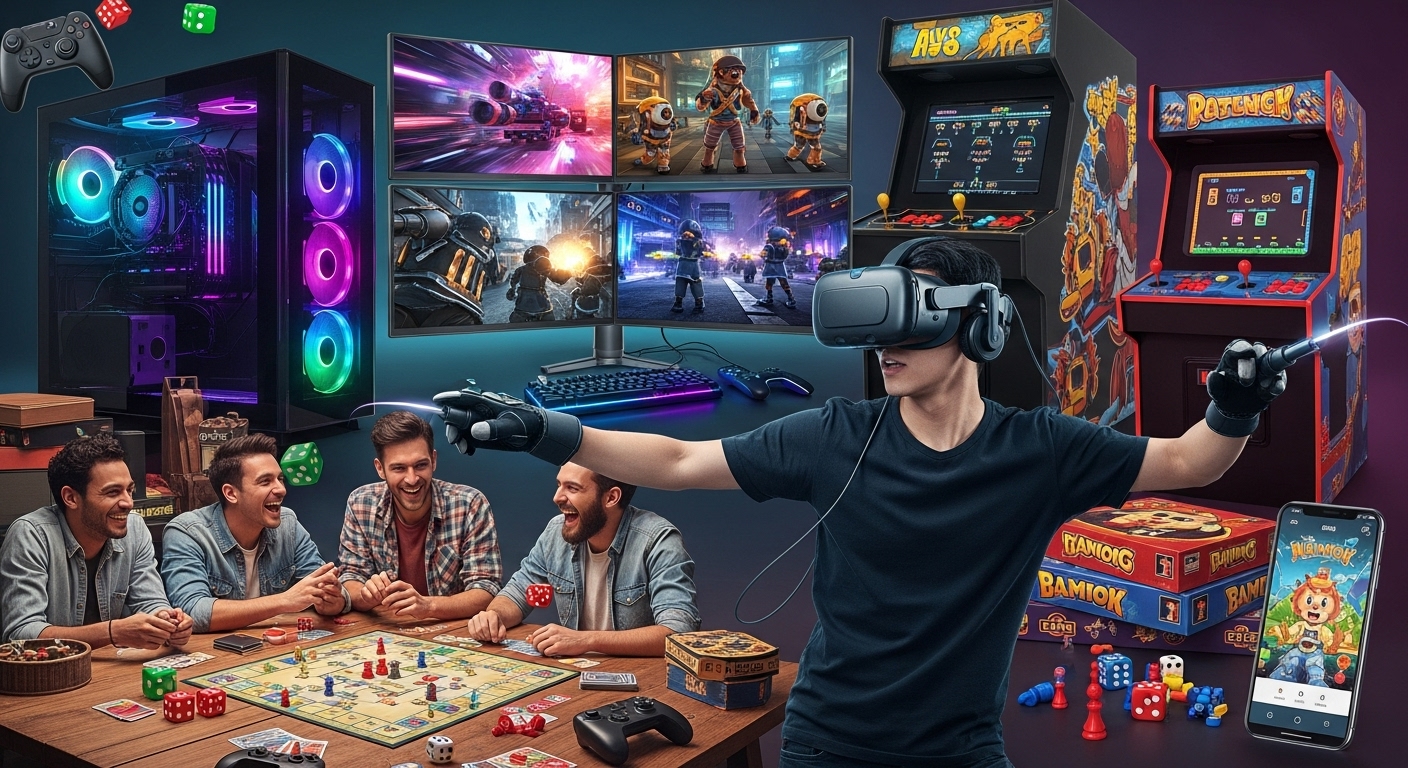

Introduction: The World of Games
Games are more than just a form of entertainment. They are a reflection of human creativity, a medium for social connection, and a tool for learning and personal growth. From traditional board games played for centuries to cutting-edge digital experiences, games have evolved into an essential part of human culture. They challenge the mind, entertain the senses, and connect people across the globe. In this blog, we will explore the fascinating world of games, examining their history, impact on society, cognitive benefits, cultural significance, and the future of gaming.
The Evolution of Games
Games have existed since ancient times. Early humans played simple games using stones, sticks, or bones, often to teach strategy or coordination. Board games like Senet in Egypt and Go in China became cultural staples that required skill and critical thinking. As societies developed, games evolved alongside technology. Card games, chess, and dice games spread across regions, each carrying unique cultural significance. The twentieth century introduced video games, creating interactive experiences that were immersive and globally accessible. Today, digital games encompass mobile apps, console titles, PC games, and virtual reality experiences, showing how far games have progressed from their simple beginnings.
Games as Entertainment
At their core, games are a source of entertainment. They provide fun, excitement, and a way to relax from the pressures of daily life. Video games, sports, and even traditional board games allow individuals to experience challenges, victories, and creative storytelling. They give players the opportunity to escape reality and immerse themselves in engaging worlds. This form of entertainment is interactive, which makes it more compelling than passive media such as movies or television. The engagement and enjoyment derived from games keep millions of people worldwide playing, creating a shared cultural phenomenon that transcends age, nationality, and language.
Cognitive Benefits of Games
Playing games is not only entertaining; it also offers significant cognitive benefits. Strategy games, puzzles, and problem-solving challenges improve logical thinking, decision-making, and planning. Fast-paced action games enhance hand-eye coordination, reflexes, and multitasking abilities. Multiplayer games promote communication, negotiation, and teamwork skills. Educational games have become a popular way to teach subjects such as mathematics, history, and science through interactive experiences. By combining fun and learning, games develop mental agility, critical thinking, and creativity, demonstrating that gaming can be both enjoyable and intellectually stimulating.
Games as Social Connectors
Contrary to the stereotype of isolated gamers, many games encourage social interaction. Online multiplayer games create communities where players collaborate, compete, and communicate across continents. Board games, sports, and party games facilitate face-to-face interaction, bonding friends and family members. Esports tournaments and gaming conventions bring players together in shared experiences, building relationships and social networks. Through these interactions, games foster teamwork, empathy, and cultural exchange, highlighting their role as social connectors that bring people together in ways few other activities can.
The Cultural Significance of Games
Games have cultural value beyond entertainment. Traditional games carry historical and regional importance, reflecting societal values, customs, and strategies. Modern digital games often explore complex themes such as morality, identity, and social justice, offering players a chance to engage with ideas in interactive ways. Popular games influence art, fashion, music, and even language, becoming cultural touchstones that define generations. Gaming culture has developed its own identity, complete with fan communities, conventions, online content creators, and competitive leagues, demonstrating that games are deeply embedded in contemporary culture.
The Rise of Competitive Gaming
Esports has transformed gaming into a professional pursuit. Competitive gaming tournaments attract millions of viewers worldwide and offer substantial prize money, sponsorships, and career opportunities. Esports require strategic thinking, coordination, teamwork, and dedication, rivaling traditional sports in skill and professionalism. Professional players train rigorously, analyzing opponents, optimizing performance, and maintaining mental resilience. The growth of esports has expanded the gaming industry, creating jobs, entertainment events, and media coverage, proving that games are more than hobbies—they are legitimate careers and a global spectacle.
Games and Creativity
Games inspire creativity in multiple ways. Open-world and sandbox games allow players to design environments, craft characters, and create stories. This hands-on creativity fosters artistic expression, problem-solving, and innovation. Game development itself is a creative process, combining programming, storytelling, art, and sound design. The ability to interact with games encourages players to think differently, experiment, and generate original ideas. Creativity in games is not limited to digital formats; traditional games like role-playing and strategy games also stimulate imaginative thinking and adaptive strategies.
Educational Potential of Games
Games have immense potential as educational tools. They transform learning from a passive activity into an interactive experience, making education engaging and effective. Simulations teach practical skills, strategy games develop planning abilities, and language games improve communication. Many educational institutions now integrate gamification into curricula, using game mechanics to motivate students and enhance learning outcomes. By combining challenge, reward, and immersion, games can make knowledge acquisition enjoyable and memorable. The educational potential of games ensures they are not just a pastime but a tool for personal growth and lifelong learning.
Psychological Benefits of Games
Beyond cognitive and educational benefits, games also support psychological well-being. Playing games can reduce stress, improve mood, and provide a sense of accomplishment. Social games combat loneliness, offering connections with like-minded individuals. Narrative-driven games allow players to explore emotions and experiences in safe environments, building empathy and self-awareness. Games provide opportunities for mastery and progression, boosting confidence and motivation. Recognizing the positive effects of gaming on mental health underscores its value as a tool for holistic personal development.
The Technological Future of Games
The future of gaming is intertwined with technological innovation. Virtual reality and augmented reality promise immersive experiences that blur the line between physical and digital worlds. Artificial intelligence enhances gameplay with adaptive challenges, smarter non-player characters, and personalized experiences. Cloud gaming and streaming services make games accessible to anyone with an internet connection, reducing barriers to entry. Emerging technologies will continue to expand the boundaries of gaming, offering unprecedented levels of interaction, creativity, and entertainment.
Challenges in the Gaming Industry
Despite its growth, the gaming industry faces challenges. Concerns about addiction, excessive screen time, and online toxicity require careful attention. Representation, inclusivity, and diversity in games are ongoing discussions within the industry. Balancing monetization with fair gameplay is a constant struggle. Addressing these issues is essential for maintaining gaming as a positive, sustainable form of entertainment. Responsible design, community management, and awareness can ensure that gaming continues to enrich lives without negative consequences.
Games as Cultural Storytellers
Modern games are powerful tools for storytelling. They allow players to experience narratives in interactive ways, making choices that influence outcomes. Games can explore complex social, political, and ethical issues, offering players a unique perspective on real-world challenges. This interactive storytelling makes games a medium for empathy, reflection, and engagement. The ability to immerse oneself in a story, interact with characters, and shape outcomes sets games apart from other forms of media, making them uniquely impactful as cultural storytellers.
The Economic Impact of Games
The gaming industry is a major economic driver. Revenue from video games, mobile apps, esports, and game-related merchandise reaches billions of dollars annually. Games create employment opportunities for developers, designers, marketers, and streamers. They drive technological innovation and generate cultural exports that influence entertainment worldwide. The economic significance of games demonstrates that they are not only a cultural and social phenomenon but also a major contributor to global economies.
Conclusion: Games as a Universal Experience
Games are a universal part of human culture. They entertain, educate, inspire, and connect people. They develop skills, foster creativity, and bring communities together. From traditional board games to cutting-edge virtual reality experiences, games have evolved alongside humanity, reflecting our culture, values, and aspirations. As technology advances, the role of games will continue to grow, offering new ways to challenge ourselves, experience stories, and connect with others. Games are more than just play—they are a mirror of human creativity, innovation, and connection, shaping lives in profound and lasting ways.