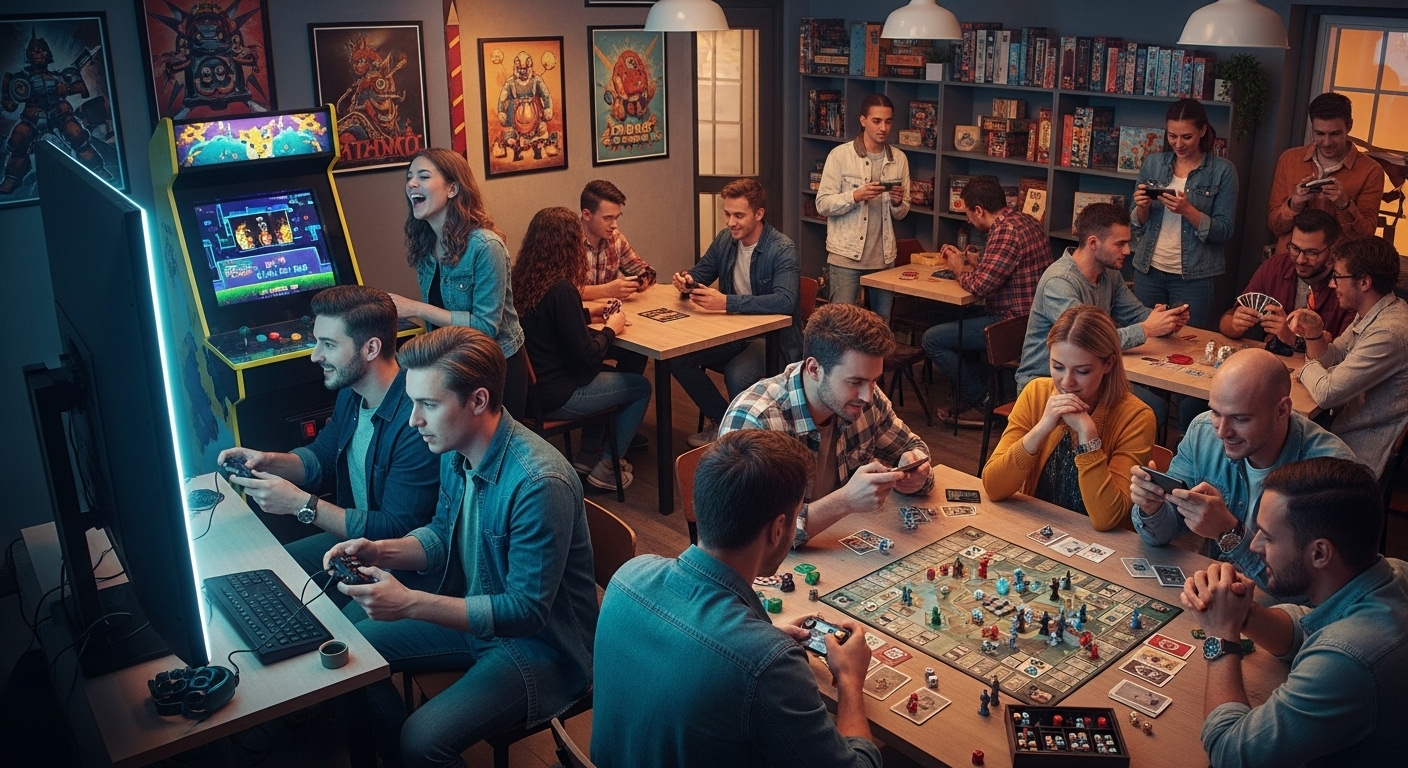

Video games have evolved from simple pixelated experiences into immersive, multi-billion-dollar entertainment phenomena. Once considered a niche hobby, gaming has now become a mainstream industry that touches nearly every corner of modern culture. From mobile gaming to professional esports tournaments, games now cater to a wide variety of audiences, offering everything from casual entertainment to competitive arenas that rival traditional sports.
This blog explores the world of gaming, examining its evolution, key trends, impact on culture, technological innovations, and the future of interactive entertainment. With the gaming landscape constantly changing, understanding its growth and influence provides insight into one of the most exciting creative industries today.
The Early Days: From Arcades to Home Consoles
The history of gaming begins in the late 1970s with the birth of arcade games. Titles like Pong and Space Invaders introduced players to digital entertainment, combining simple gameplay with the thrill of competition. Arcades became social hubs, where players could test their skills, interact with others, and experience the excitement of interactive challenges.
The arrival of home consoles in the 1980s marked the next significant evolution. Nintendo Entertainment System and Sega Genesis brought gaming into living rooms around the world. Players could now enjoy titles like Super Mario Bros., The Legend of Zelda, and Sonic the Hedgehog without leaving their homes. Home consoles expanded the audience for gaming, making it accessible to entire families and creating iconic characters that would define generations.
The Rise of Personal Computers and Online Gaming
While consoles dominated living rooms, personal computers began to carve out their own gaming niche in the 1990s. PCs offered higher graphics capabilities, more complex gameplay, and genres that consoles could not yet accommodate, such as real-time strategy and simulation games. Titles like Warcraft, Doom, and The Sims introduced players to deeper, more intricate worlds, expanding the possibilities of interactive storytelling and gameplay complexity.
The 1990s also marked the beginning of online gaming. Multiplayer experiences allowed players to connect with friends and strangers across the globe. Games like Quake and StarCraft introduced competitive online play, laying the foundation for the massive multiplayer online experiences that dominate the industry today. Online communities began forming around shared interests, creating lasting social connections and a sense of belonging that went beyond the digital screen.
Mobile Gaming: Gaming in the Palm of Your Hand
The introduction of smartphones transformed gaming yet again. Mobile gaming made games accessible to a broader demographic, including individuals who may never have considered traditional consoles or PCs. Casual titles like Angry Birds, Candy Crush, and Temple Run became global sensations, offering short, entertaining gameplay that could be enjoyed anywhere.
Mobile gaming also introduced the freemium model, where games are free to download but offer in-app purchases for cosmetic items, extra lives, or special abilities. This model proved highly profitable and expanded the types of games available, from puzzle games and simulations to competitive multiplayer experiences. The accessibility and convenience of mobile gaming ensured that nearly everyone could experience the joy of gaming, regardless of age or background.
The Explosion of Competitive Gaming: eSports
Competitive gaming, or eSports, has transformed gaming into a spectator sport. Professional players and teams compete in organized tournaments for cash prizes, sponsorships, and international recognition. Titles such as League of Legends, Dota 2, Counter-Strike, and Fortnite have become staples of the eSports world, drawing millions of viewers online and filling stadiums during major events.
eSports has not only created new career opportunities for players but also for coaches, analysts, content creators, and broadcasters. Streaming platforms like Twitch and YouTube Gaming allow audiences to watch live gameplay, interact with players, and build communities around shared interests. This social aspect of gaming has transformed it into a culture and lifestyle, connecting millions of people worldwide through shared experiences.
Gaming as a Storytelling Medium
Modern games are more than just entertainment; they are vehicles for storytelling. Titles like The Last of Us, Red Dead Redemption 2, and The Witcher 3: Wild Hunt offer players immersive narratives that rival those of films and novels. Players can experience deep, emotional stories while actively participating in the game world, making choices that shape the outcome of the narrative.
Interactive storytelling allows players to engage with characters, explore detailed environments, and experience consequences for their actions. This level of immersion is unique to gaming and has helped elevate it as a respected form of art and entertainment. Developers now approach games as opportunities to craft experiences that evoke emotion, challenge perceptions, and tell compelling stories that resonate with players worldwide.
The Role of Technology in Modern Gaming
Technological innovation continues to push gaming forward, creating richer and more immersive experiences. High-definition graphics, realistic physics engines, and advanced artificial intelligence allow for dynamic gameplay that adapts to player actions.
Virtual reality (VR) is one of the most exciting innovations in gaming. VR headsets create fully immersive worlds, allowing players to physically interact with the game environment. Augmented reality (AR) enhances the real world by overlaying digital elements, creating unique experiences like Pokémon Go, which blend physical and virtual spaces.
Artificial intelligence (AI) plays a critical role in modern games, from enhancing non-player character behavior to personalizing gameplay experiences. AI can also detect cheating or abusive behavior, creating safer and more enjoyable gaming environments. Meanwhile, cloud gaming technology allows players to stream high-quality games without the need for expensive hardware, making advanced gaming accessible to a larger audience.
The Social Impact of Gaming
Gaming is no longer an isolated activity; it has become a powerful social medium. Multiplayer online games foster teamwork, strategic thinking, and communication skills. Social features within games, including chat functions, guilds, and in-game events, create opportunities for collaboration and relationship building.
The rise of gaming communities has also influenced popular culture. Memes, fan art, live streams, and competitive tournaments have all contributed to the integration of gaming into mainstream media. Players no longer just play games—they participate in a shared culture that connects millions of individuals worldwide.
Challenges Facing the Gaming Industry
Despite its growth and influence, the gaming industry faces several challenges. One major concern is the rise of gaming addiction, which can negatively impact mental health and social relationships. Developers and regulators are increasingly implementing features to promote healthy gaming habits, such as time limits, parental controls, and in-game reminders.
Cybersecurity is another critical challenge. As online gaming grows, so do risks related to hacking, account theft, and fraud. Ensuring the security of personal data and financial transactions is essential to maintaining player trust and protecting the integrity of gaming platforms.
Finally, diversity and inclusion remain ongoing issues. While gaming has made strides toward representing different genders, ethnicities, and cultures, there is still work to be done to create inclusive experiences that reflect the full spectrum of players.
The Future of Gaming
Looking ahead, the future of gaming promises even more innovation and excitement. Cloud gaming will continue to remove hardware barriers, allowing more people to access high-quality experiences. VR and AR will create increasingly immersive worlds, while AI will enhance gameplay and storytelling in unprecedented ways.
Gaming will also continue to expand socially and culturally. eSports will grow in popularity, mobile gaming will reach new audiences, and multiplayer experiences will foster global connections. Games will increasingly be recognized as cultural artifacts, exploring complex themes, societal issues, and human emotions in ways that resonate with players.
Moreover, the lines between gaming, education, and entertainment are blurring. Serious games, which combine learning and gameplay, are being used in schools, corporate training, and healthcare. Gamification techniques are encouraging productivity, creativity, and problem-solving, demonstrating that games can have meaningful impacts beyond entertainment.
Conclusion: Gaming as a Cultural Phenomenon
Gaming has come a long way from its arcade origins. It has grown into a multifaceted industry that blends entertainment, technology, art, and culture. From home consoles and personal computers to mobile devices and virtual reality, gaming continues to evolve and shape the way we play, connect, and experience stories.
The social, cultural, and technological impact of gaming is undeniable. It has transformed how people interact, learn, and express themselves. With constant innovation and growing global influence, gaming is not just a pastime—it is a cultural phenomenon that will continue to captivate, challenge, and inspire generations to come.
Gaming is no longer confined to a screen; it is a shared experience, a form of expression, and a gateway to new worlds. Its evolution is a testament to human creativity and the desire to connect, explore, and play. The future of gaming promises to be even more immersive, inclusive, and innovative, making it one of the most exciting entertainment industries of our time.