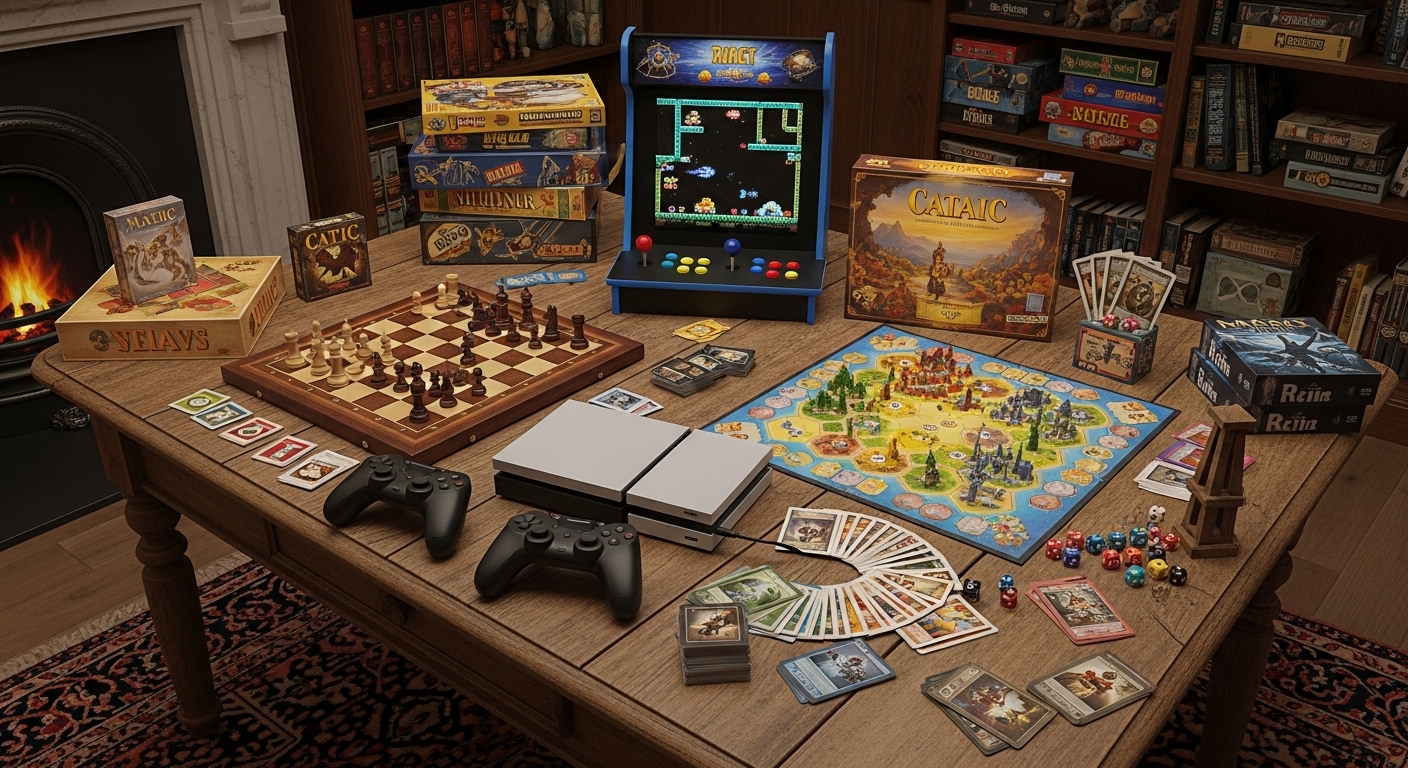

Video games have grown from simple pastimes into one of the most influential and engaging forms of entertainment. What began as pixelated adventures on arcade machines in the 1970s has transformed into an industry generating billions of dollars annually, with immersive virtual worlds, esports competitions, and a diverse range of genres appealing to gamers of all ages. Today, gaming encompasses everything from casual mobile games to complex role-playing epics and competitive esports, touching millions of lives across the globe.
In this post, we explore the fascinating journey of video games, examining the historical milestones, technological advancements, and cultural impact that have made gaming one of the most dynamic and inclusive forms of entertainment today. From the days of arcade classics to the age of immersive VR experiences, gaming has evolved in ways that few could have predicted. Let’s dive into the world of games and take a closer look at how it all began, where it stands now, and where it’s heading.
The Birth of Gaming: Arcades and Early Consoles
Video games as a mainstream form of entertainment began in the late 1960s and early 1970s with the advent of arcade machines. The first commercially successful video game, Pong, released in 1972 by Atari, became an instant hit, drawing crowds to arcades with its simple yet addictive gameplay. Pong was a two-player game where players controlled paddles and attempted to bounce a ball back and forth, resembling a digital version of table tennis. The mechanics were simple, but the competition was fierce, leading to the explosion of arcades across cities worldwide.
Soon, developers began to experiment with more complex games. Space Invaders (1978) introduced alien invaders attacking a city, marking the start of a genre that would dominate the arcade scene. This was followed by Pac-Man (1980), which became a cultural icon, and games like Donkey Kong (1981), where players would control characters in a platform-style setting.
As arcade games grew in popularity, home consoles began to make their mark. In 1977, the Atari 2600 was released, bringing home gaming to living rooms around the world. This console, with its interchangeable cartridges, allowed players to enjoy arcade-quality games without needing to leave home. Titles like Space Invaders and Asteroids were ported from arcades to home consoles, and the success of the Atari 2600 paved the way for the future of gaming in homes worldwide.
The Rise of 3D Graphics: Entering the Next Generation
The 1990s marked a significant shift in the world of gaming, with the advent of 3D graphics. Prior to this, most games were 2D, with flat visuals and simple designs. However, as technology improved, developers started to push the boundaries of what was possible. With the release of the Sony PlayStation in 1994 and the Nintendo 64 in 1996, the gaming world entered a new era of 3D gaming.
Super Mario 64 (1996) on the Nintendo 64 was one of the first truly groundbreaking 3D platformers, offering players a fully realized three-dimensional world to explore. The free-roaming nature of the game, paired with revolutionary graphics for its time, helped set the standard for future 3D games. On the other hand, Sony’s PlayStation brought titles like Final Fantasy VII and Metal Gear Solid, which showcased rich, cinematic storytelling combined with advanced 3D graphics.
During this period, game developers started experimenting with more complex narratives and gameplay mechanics. Action-adventure games became more open-ended, allowing players to explore vast worlds, solve puzzles, and interact with a variety of characters. This era of 3D gaming saw the birth of some of the most beloved franchises, such as The Legend of Zelda, Tomb Raider, and Gran Turismo.
The Rise of Online Gaming: A Global Community
In the late 1990s and early 2000s, the rise of the internet brought a revolutionary change to the gaming landscape—online multiplayer gaming. Games like Quake (1996) and StarCraft (1998) allowed players to connect over the internet, paving the way for the growth of competitive and cooperative gaming.
However, it wasn’t until the early 2000s that online gaming truly exploded. World of Warcraft (2004) changed the way people interacted with games, offering a persistent online world where millions of players could coexist, collaborate, and compete in real-time. Warcraft III and League of Legends (2009) helped solidify the rise of multiplayer online battle arena (MOBA) games, which would go on to become a major genre in the gaming industry.
Consoles, too, began to embrace online gaming. The Xbox 360 and PlayStation 3 introduced online services like Xbox Live and PlayStation Network, enabling players to connect with friends and compete in a variety of games, from Halo 3 to Call of Duty: Modern Warfare. These services allowed players to form communities, create teams, and even compete in massive tournaments for cash prizes.
Online gaming did more than simply change the way we play; it transformed gaming into a social experience. Online platforms like Twitch, where players stream their gameplay live for audiences, turned gaming into a spectator sport. It wasn’t just about playing games anymore; it was about watching others play and even learning strategies or tricks from professional gamers.
Mobile Gaming: Gaming on the Go
As smartphones became ubiquitous in the 2000s, mobile gaming emerged as a new and rapidly growing sector in the gaming world. Games that were once confined to consoles and PCs could now be played on-the-go, thanks to the power of modern smartphones. Games like Angry Birds (2009), Candy Crush Saga (2012), and Clash of Clans (2012) became household names, reaching millions of players who had never previously identified as “gamers.”
The rise of mobile gaming brought with it a new style of gaming—one that was designed to be played in short bursts, anywhere and anytime. Mobile games, often free-to-play with in-app purchases, were accessible to a broader audience than ever before. This democratization of gaming allowed casual players to enjoy the medium without the need for expensive hardware or extensive time commitments.
Furthermore, mobile gaming has expanded beyond casual titles. Games like Pokémon GO (2016) brought augmented reality (AR) into the mix, merging real-world exploration with virtual gameplay. These advancements opened up new possibilities for gaming that extended beyond traditional screens and controllers.
The Growth of Esports: Gaming as a Professional Career
What was once seen as a pastime for hobbyists has now transformed into a legitimate professional career for many players. Esports, or competitive video gaming, has grown into a billion-dollar industry with players competing for massive prize pools in games like League of Legends, Counter-Strike: Global Offensive, Dota 2, and Fortnite.
The rise of streaming platforms like Twitch has played a pivotal role in this transformation. Professional gamers can now showcase their skills to global audiences, attracting sponsorships, partnerships, and even fan followings. Major tournaments such as The International (for Dota 2) and the League of Legends World Championship draw millions of viewers, rivaling traditional sports events in terms of audience size and media coverage.
Esports also offers unique career paths that weren’t possible a decade ago. Professional players can make a living from sponsorships, tournament winnings, and streaming revenues. Many esports organizations have formed teams that compete in different games, with some teams even signing players as if they were professional athletes.
As esports continues to grow, it has gained recognition in mainstream sports media, with large-scale tournaments being broadcast on TV and even included in multi-sport events like the Asian Games. The rapid growth of esports has helped shift the perception of gaming from a hobby to a legitimate profession, with institutions offering scholarships and universities developing courses in esports management and game design.
Virtual Reality and the Future of Gaming
The future of gaming lies in new technologies that promise to deliver even more immersive and engaging experiences. Virtual reality (VR) and augmented reality (AR) are set to revolutionize the way we experience games. VR headsets, such as the Oculus Rift, PlayStation VR, and HTC Vive, enable players to step inside the game world and interact with their surroundings in a way that was previously unimaginable.
VR offers a fully immersive experience, where players can look around, move within the game world, and interact with virtual objects in real time. The potential for VR in gaming is vast—everything from sports simulators to action-packed adventures could be revolutionized with this technology. Games like Beat Saber and Half-Life: Alyx have already showcased the power of VR, with players physically moving to engage in the gameplay.
Similarly, AR games like Pokémon GO combine real-world elements with virtual gameplay, creating a hybrid experience that encourages players to explore their physical environment while interacting with digital elements. As these technologies continue to improve, we are likely to see more games that blur the lines between reality and virtual worlds.
The Evolution Continues: What’s Next for Games?
As technology advances, the future of gaming is bound to be filled with even more exciting developments. Cloud gaming, where games are streamed from remote servers instead of being run locally, will make high-quality games accessible to people on lower-end devices, and may even eliminate the need for dedicated gaming consoles or PCs.
Artificial intelligence (AI) will continue to enhance the gameplay experience, with smarter NPCs (non-playable characters) that adapt to player behavior, making virtual worlds feel more dynamic and alive. Storytelling in games will become even more complex, with branching narratives that change based on player decisions, offering new levels of immersion.
Additionally, the cultural and social aspects of gaming will continue to evolve. Multiplayer gaming will become more integrated into our daily lives, with virtual spaces where friends and strangers can connect, compete, and collaborate in games, creating online communities that feel just as real as physical ones.
Conclusion
From arcade classics to the world of virtual reality, gaming has evolved in ways that were once unimaginable. It has grown into a global industry, offering diverse experiences for every type of player, from casual mobile gamers to hardcore esports competitors. As technology continues to advance, the gaming world will only continue to expand, offering new and exciting possibilities for the future. Whether you’re a longtime gamer or someone new to the medium, one thing is clear—gaming is more than just a pastime. It’s a cultural force, a career path, and a gateway to incredible new worlds. The journey is far from over, and the best is yet to come.