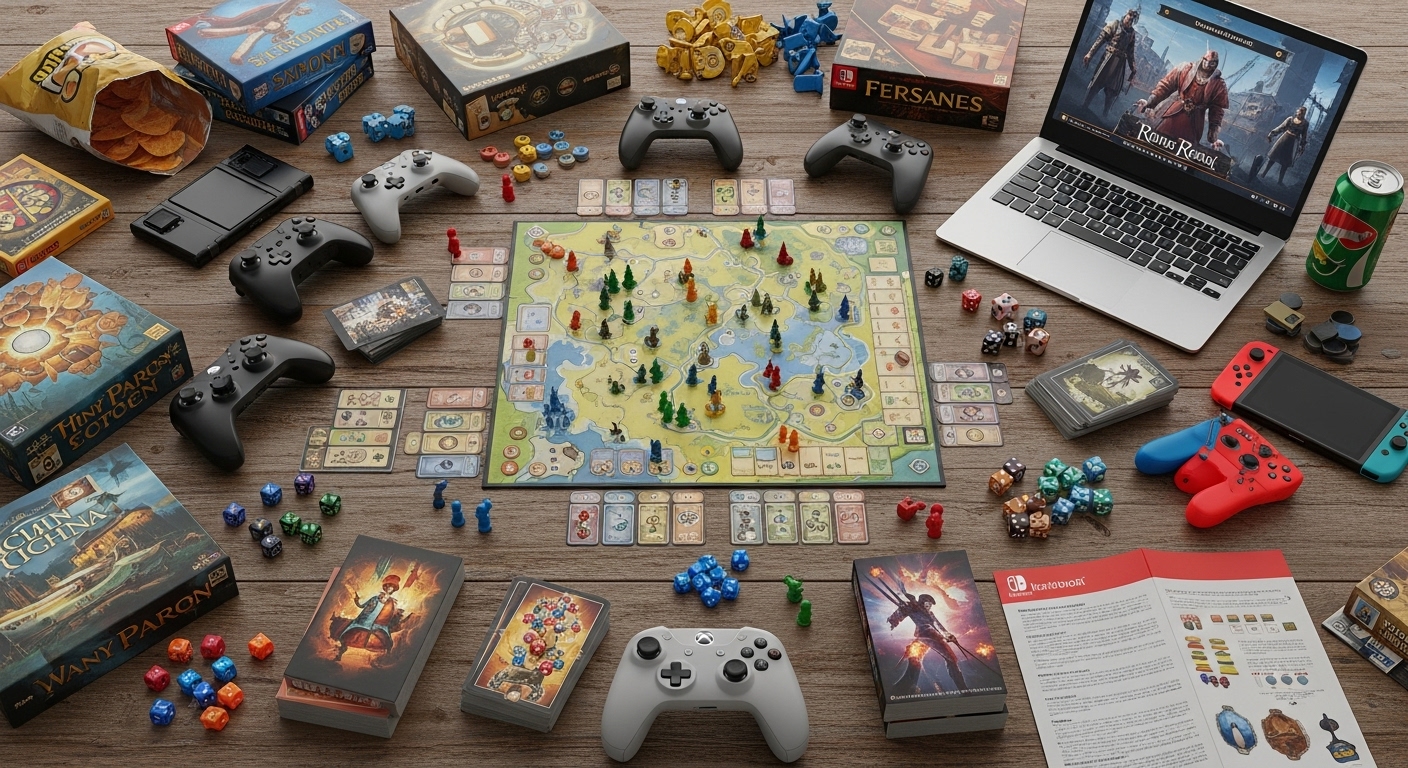

Introduction: Games as a Universal Language
Games have existed as long as human civilization itself. From the simple games played by ancient cultures to the complex, immersive digital experiences of today, games have transcended cultural and geographical boundaries to become a global phenomenon. Whether it’s a traditional board game, a competitive video game, or an online multiplayer experience, games have the unique ability to connect people across generations and continents.
In this blog post, we’ll explore the evolution of games, their impact on society, and the role they play in shaping our modern world. We will dive into the various types of games that have emerged over time, how they have influenced social interaction, cognitive development, and even cultural identity, and consider what the future holds for gaming in an increasingly digital and interconnected world.
The Origins of Games: From Simple Entertainment to Complex Strategy
Games have always been a reflection of society’s needs, values, and interests. The oldest known game, Senet, was played in ancient Egypt, dating back to 3100 BCE. Archaeologists have found evidence of games played in Mesopotamia, China, and other early civilizations. These early games were often symbolic, reflecting not just entertainment, but also culture, religion, and even the mysteries of life and death. For instance, ancient Egyptians believed that the game of Senet was a spiritual journey, a metaphor for life and death.
As civilization advanced, so did the complexity of games. The ancient Greeks and Romans enjoyed games such as dice games and chariot races, both of which introduced an element of chance and strategy. Games like chess (originating in India around the 6th century) brought a more intellectual form of competition, emphasizing strategy, foresight, and planning. Chess was soon adopted by various cultures, including the Arabs and Europeans, becoming one of the most enduring games in history.
By the 19th and 20th centuries, games had moved into the realm of entertainment. The industrial revolution brought mass production, and with it came the invention of games like Monopoly, Scrabble, and Clue — games that were designed to be enjoyed by families and communities. These games, along with early card games, established the foundation for modern board games, which remain popular today.
The Digital Revolution: Video Games Take Center Stage
The advent of digital technology in the 20th century transformed the gaming landscape. In the 1970s, the introduction of arcade games like Pong and Space Invaders marked the beginning of video gaming as we know it. These early video games were simple by today’s standards, but they laid the groundwork for what would become a multi-billion-dollar global industry.
In the 1980s and 1990s, home consoles like the Nintendo Entertainment System (NES), Sega Genesis, and PlayStation revolutionized gaming. These consoles allowed players to experience more immersive games with better graphics, sound, and complex gameplay. Super Mario Bros., The Legend of Zelda, and Street Fighter II became household names, and the appeal of video games began to expand beyond children to include adults as well.
With the growth of personal computers and the internet, the 2000s saw the rise of online multiplayer games and massively multiplayer online role-playing games (MMORPGs) such as World of Warcraft and EVE Online. These games created expansive digital worlds where thousands of players could interact with each other in real-time, forming guilds, trading goods, and even engaging in political and social activities within the game world.
Today, video games have evolved into a multi-faceted industry encompassing everything from mobile games to virtual reality and augmented reality. Games like Fortnite, Minecraft, and League of Legends have taken gaming to new heights, attracting millions of players worldwide and building massive communities. With the introduction of cloud gaming and more powerful consoles, it’s clear that the future of gaming is poised for even greater expansion.
Types of Games: More Than Just Entertainment
The variety of games available today is staggering. Whether played on a console, a computer, or a smartphone, games come in many different forms. Here are some of the most prominent types of games:
Board Games: The Foundation of Social Interaction
Despite the digital revolution, board games remain one of the most popular forms of entertainment worldwide. Games like Monopoly, Chess, Scrabble, and Catan are staples in many households, providing opportunities for friends and family to engage in face-to-face competition and cooperation. Board games are unique in that they require social interaction, strategy, and sometimes a bit of luck, making them accessible to players of all ages.
In recent years, the board game industry has experienced a resurgence, with a wave of innovative designs that have brought new mechanics, themes, and experiences to the table. Games like Pandemic, Ticket to Ride, and Gloomhaven have revitalized the industry, offering fresh experiences for seasoned gamers and newcomers alike.
Card Games: Strategy and Luck Combined
Card games have been played for centuries, and they remain a cornerstone of both casual and competitive gaming. Poker, Bridge, and Blackjack are staples in casinos and card rooms around the world, while more casual games like Uno and Rummy are favorites in family gatherings. In recent years, collectible card games (CCGs) like Magic: The Gathering and Hearthstone have gained massive popularity, offering deep strategic gameplay combined with collectible elements.
Video Games: From Pixels to Realism
Video games, as we discussed earlier, have come a long way since the early days of Pong and Space Invaders. Today’s games are immersive, visually stunning experiences that allow players to explore vast virtual worlds, engage in complex narratives, and test their skills in highly competitive environments. Genres such as action, adventure, role-playing, and simulation cover a broad spectrum of gameplay, offering something for every type of player.
Mobile Games: Gaming on the Go
The rise of smartphones has made gaming more accessible than ever. Mobile games are not just for casual players but are now home to some of the most popular and successful games in the world. Titles like Clash of Clans, Candy Crush, and Pokémon GO have attracted millions of players worldwide, making gaming something that can be done anywhere, at any time.
Esports: The Competitive Gaming Revolution
Esports, or competitive video gaming, has exploded in popularity in the last decade. Games like League of Legends, Dota 2, and Counter-Strike have transformed gaming into a spectator sport, with professional players competing in tournaments for massive prize pools. Esports has created a global community of players and fans, with streaming platforms like Twitch and YouTube offering live broadcasts of competitions. Major esports events now attract millions of viewers and are even broadcast on traditional television networks.
The Social and Psychological Impact of Games
While games are often seen as mere entertainment, they have far-reaching effects on social interaction, cognitive development, and even mental health.
Cognitive Benefits
Many games, especially strategy and puzzle games, require players to think critically, plan ahead, and solve problems. These games enhance cognitive abilities such as memory, spatial awareness, and decision-making. Studies have shown that regular gaming can improve brain function and delay cognitive decline in older adults. Even action games, which may seem fast-paced, require quick thinking and hand-eye coordination, benefiting reflexes and multitasking abilities.
Social Interaction
Games, especially multiplayer online games, create communities and social networks where players can interact, form friendships, and collaborate. Multiplayer games like World of Warcraft and Fortnite have built vast social networks where players connect with others from around the world. Many gamers meet lifelong friends through these online communities, creating a sense of belonging and camaraderie.
Emotional and Mental Health
While there are concerns about gaming addiction, research has also shown that games can have positive effects on mental health. For some, games provide an escape from the stresses of everyday life, offering a safe space to relax and recharge. Certain games, especially those with strong narratives, can evoke deep emotional connections and provide catharsis. Games like Journey and Life is Strange tackle serious themes such as loss, identity, and mental health, providing players with meaningful emotional experiences.
The Future of Gaming: Virtual Reality and Beyond
The future of gaming is undeniably exciting. As technology advances, games will become even more immersive, with virtual reality (VR) and augmented reality (AR) creating experiences that are increasingly indistinguishable from reality. VR headsets are already allowing players to step inside their favorite games, offering a level of immersion that was previously unimaginable.
In addition to VR and AR, advancements in artificial intelligence (AI) will enable games to become more dynamic, with non-player characters (NPCs) reacting to players’ actions in more realistic ways. This could lead to entirely new genres of games, where every experience feels unique and personalized.
Conclusion: Gaming as a Reflection of Humanity
Games are not just a form of entertainment; they are a mirror reflecting the values, challenges, and creativity of humanity. From the earliest dice games to the complex virtual worlds of today, games have been a way for people to explore, compete, socialize, and express themselves. As technology continues to evolve, the future of gaming is full of potential, offering new opportunities for connection, education, and entertainment.