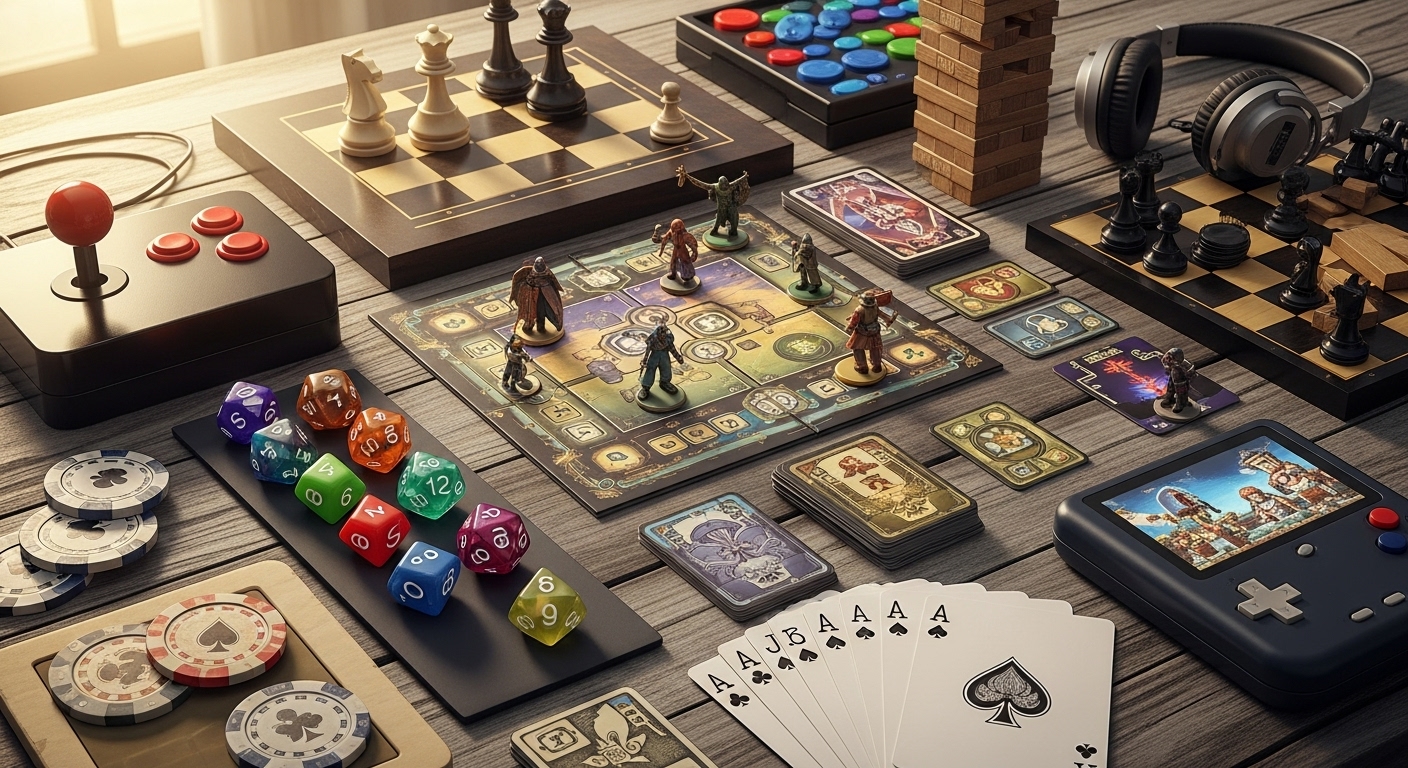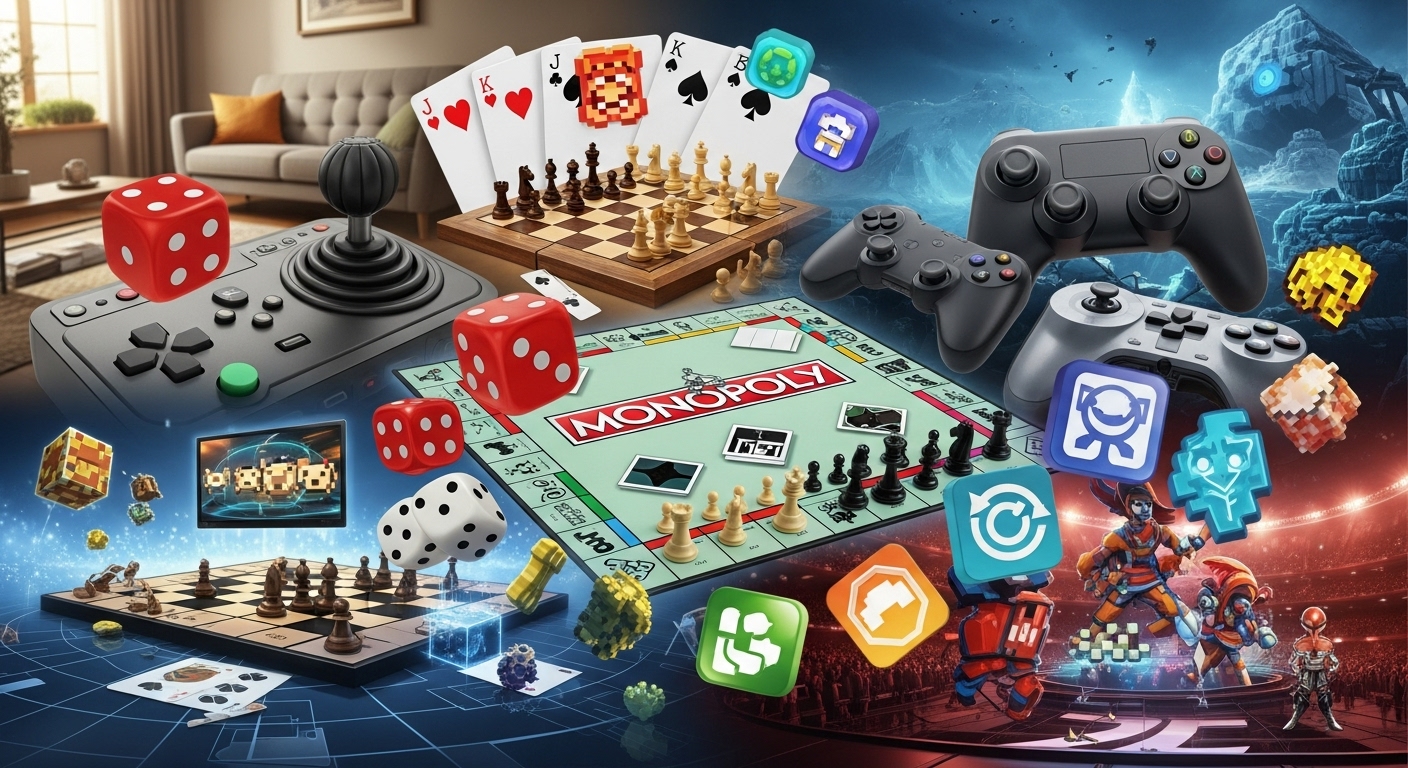

Games have long been an integral part of human culture. They serve as a medium for entertainment, learning, competition, and social interaction. Whether it’s a classic board game like Monopoly, an intense multiplayer video game like Call of Duty, or a solo puzzle game on a smartphone, games transcend generations and continue to captivate audiences worldwide. This blog post delves into the evolution of games—from traditional, physical games to the immersive, virtual experiences of today—and explores how they’ve shaped our culture, fostered creativity, and impacted the way we connect with one another.
The Origins of Gaming: Board Games, Card Games, and Puzzles
The history of games dates back thousands of years. The oldest known game, Senet, was played in ancient Egypt around 3100 BCE. This board game, which involved moving pieces across a grid-based board, is considered the precursor to many modern board games we know today. Other early games, such as the Royal Game of Ur and Mancala, were played in ancient Mesopotamia and Africa, respectively. These early games weren’t merely recreational; they also had spiritual and symbolic meanings, serving as tools for reflection, strategy, and even divination.
As societies evolved, so did games. Ancient China gave rise to the game of Go, a strategy-based board game that continues to be popular today. Meanwhile, India introduced chess, a game that would go on to become a global phenomenon. Both Go and chess were more than just games of leisure; they required deep thought, strategic planning, and foresight. These games were also used to train military leaders, honing their skills in strategy and tactics.
In the Western world, card games took hold during the Middle Ages. Games like Poker, Bridge, and Rummy became staples in European societies and eventually spread across the globe. These games, often played in social settings, became a way for people to bond over friendly competition.
Puzzles, too, have a long history, with the first known jigsaw puzzle being created in 1767. Puzzle games like Sudoku, crosswords, and logic puzzles gained popularity as ways to exercise the mind, offering both relaxation and intellectual challenge.
The Rise of Video Games: From Pixelated Adventures to Immersive Worlds
While board games and card games continued to thrive, the mid-20th century saw the emergence of a new kind of game: video games. The invention of the electronic computer opened the door for a new type of entertainment, and in the early 1950s, the first rudimentary video games began to appear.
One of the earliest video games, Tennis for Two (1958), was a simple tennis simulation created on an oscilloscope screen. However, it was Pong (1972), an arcade game developed by Atari, that truly marked the beginning of the video game industry. Pong was a simple two-player game that simulated table tennis, but its success laid the foundation for the burgeoning gaming industry. It was one of the first games to offer an interactive experience, and its success in arcades paved the way for more sophisticated video games.
In the 1980s, the gaming industry exploded with the release of iconic titles like Pac-Man, Space Invaders, and Donkey Kong. These arcade games captivated players with their simple yet addictive gameplay and vibrant graphics. The home console market also flourished, with systems like the Atari 2600 and the Nintendo Entertainment System (NES) bringing video games into people’s homes for the first time.
As technology advanced, so did the complexity of video games. The 1990s saw the rise of 3D graphics, with games like Super Mario 64 and The Legend of Zelda: Ocarina of Time pushing the boundaries of what was possible in virtual worlds. The ability to explore expansive, three-dimensional environments revolutionized the gaming experience, and these games set the standard for future titles.
The Evolution of Online Gaming: Connecting Players Around the World
The advent of the internet in the late 20th century brought about another major shift in the gaming world: online multiplayer gaming. Before the internet, most video games were played solo or with a local friend or family member. However, with the rise of online gaming, players could now connect with others from around the world, competing in real-time or collaborating on missions.
One of the first massively multiplayer online games (MMOs), Meridian 59 (1996), laid the groundwork for the online gaming boom that would follow. It allowed players to interact in a shared, persistent world, battling monsters, completing quests, and forming alliances. However, it was World of Warcraft (2004) that truly defined the MMO genre. With its massive player base, immersive world, and regular updates, World of Warcraft became a cultural phenomenon, with millions of players logging in daily to experience the game.
Alongside MMOs, first-person shooters (FPS) like Halo and Call of Duty became staples of online gaming. These games allowed players to battle against each other in fast-paced, action-packed environments, and the competitive nature of these games created thriving esports communities.
Online gaming also brought about the rise of battle royale games like Fortnite and PlayerUnknown’s Battlegrounds (PUBG). These games introduced a new form of gameplay, where players compete to be the last one standing in a large, open-world map. Fortnite, in particular, became a cultural phenomenon, known not only for its gameplay but also for its regular in-game events and collaborations with major pop culture franchises.
Mobile Gaming: The Democratization of Games
With the proliferation of smartphones, mobile gaming has become one of the most accessible and popular forms of entertainment in recent years. The rise of mobile gaming can be traced back to the early 2000s, with games like Snake on Nokia phones and the introduction of the iPhone in 2007. The App Store and Google Play revolutionized mobile gaming by offering millions of games for free or at low prices, making gaming accessible to a wider audience than ever before.
Mobile games come in a wide variety of genres, from puzzle games like Candy Crush to strategy games like Clash of Clans and Clash Royale. Games like Pokémon GO and Ingress also introduced augmented reality (AR) gameplay, encouraging players to explore the real world while playing.
Mobile gaming has not only attracted casual players but also become a platform for competitive gaming. Titles like PUBG Mobile and Free Fire bring the battle royale genre to mobile devices, allowing players to compete with others from around the world. Additionally, mobile esports competitions have grown in prominence, with developers hosting tournaments and offering substantial cash prizes for top players.
The Social Aspect of Gaming: Building Communities and Friendships
One of the most significant impacts of modern gaming is its ability to bring people together. In the past, games were often solitary activities, but today, they are often social experiences. Whether it’s teaming up with friends in a cooperative game like Overwatch, competing against strangers in a Fortnite tournament, or chatting with fellow players on Discord, gaming has become a platform for social interaction.
The sense of community in gaming is one of its most unique and powerful aspects. Online gaming has given rise to virtual friendships, with players forming lasting connections through shared interests and experiences. Some gamers even form close-knit, supportive communities where they can discuss everything from strategy to life issues.
Moreover, gaming communities often extend beyond the digital world. Many gamers participate in offline events like conventions, tournaments, and meet-ups, where they can interact with fellow fans and celebrate their shared passion. Esports, in particular, has turned gaming into a spectator sport, with millions of fans tuning in to watch professional players compete in tournaments.
The Future of Gaming: Virtual Reality, AI, and More
As technology continues to advance, the future of gaming looks incredibly exciting. Virtual reality (VR) and augmented reality (AR) are set to revolutionize the way we play and experience games. With VR headsets like the Oculus Rift and HTC Vive, players can immerse themselves in fully realized virtual worlds, interacting with the environment and characters as though they were truly there.
Additionally, artificial intelligence (AI) is beginning to play a larger role in gaming. AI can be used to create smarter, more challenging opponents or even to generate procedurally created worlds that are unique to each player’s experience. As AI technology improves, we may see games that adapt to a player’s preferences and behaviors, offering a truly personalized experience.
Cloud gaming is also on the rise, with services like Google Stadia and Xbox Cloud Gaming allowing players to stream games directly to their devices without the need for powerful hardware. This could make high-quality gaming more accessible to a broader audience and eliminate the need for expensive gaming consoles or PCs.
Conclusion: Games as a Reflection of Our Culture
Games have come a long way since the days of Senet and Pong. Today, they are not just a form of entertainment but a global industry, an art form, and a medium for social connection. The evolution of gaming has been shaped by technological advancements, but it has also reflected broader cultural trends. Games have adapted to changing tastes, social dynamics, and new forms of technology, all while continuing to captivate audiences across the world.
As gaming continues to evolve, one thing remains clear: it will continue to be a powerful tool for entertainment, creativity, and social connection. Whether you’re playing a solo puzzle game, collaborating with friends on an online adventure, or spectating a professional esports event, games offer an escape, a challenge, and a community like no other form of entertainment. The future of gaming holds endless possibilities, and as technology advances, we can only imagine the new and exciting ways that games will shape our lives in the years to come.